Understand what “best monetization models” means for a solo SaaS
If you are building a solo SaaS, the best monetization models for you are the ones that are simple to operate, easy for customers to understand, and capable of growing without creating support headaches. You do not have a sales team, a finance department, or a complex billing system, so your revenue strategy has to be lean and practical.
You are also selling more than software. You are selling trust that your product will keep running, that pricing will not surprise anyone, and that upgrading or canceling will be painless. When you choose how to charge, you shape that entire experience.
Think of your monetization model as another feature of your product. You can test it, iterate on it, and refine it as you learn what your users actually value. Your first version does not need to be perfect, but it does need to be clear and intentional.
Start with simple subscription pricing
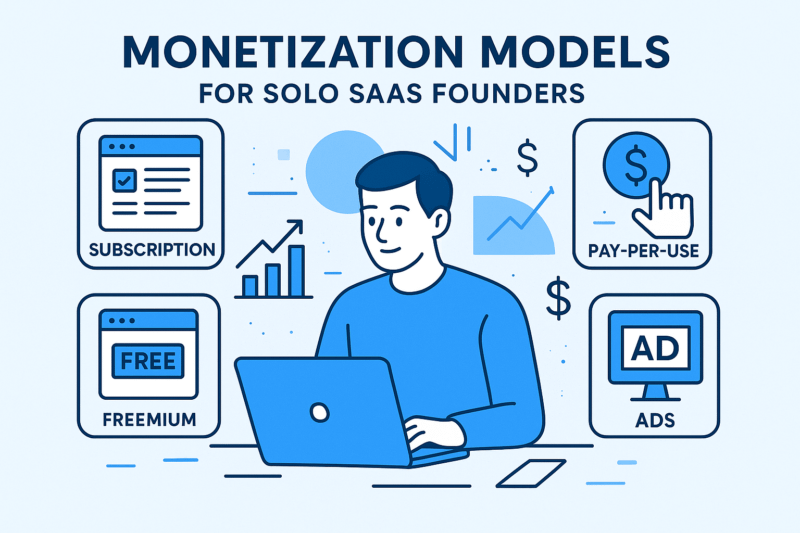
Most solo founders begin with straightforward subscriptions, and for good reason. Recurring revenue is predictable, customers understand it, and billing tools are built around it. For a lean operation, it is usually the smoothest path.
With subscription pricing, a customer pays a fixed amount on a regular schedule in exchange for ongoing access to your SaaS. You keep shipping improvements, they keep paying, and both sides know what to expect.

Decide between monthly, annual, or both
You rarely have to choose just one plan length. For many solo SaaS products, the most practical setup is:
- A monthly plan for low commitment and easier adoption
- An annual plan with a discount for better cash flow and retention
Monthly plans reduce friction for new users. They can try your product without a big upfront payment, which is helpful when you are still building a reputation. Annual plans, on the other hand, give you a larger payment upfront, which gives you breathing room to invest in development and marketing.
A common pattern is to set your annual plan at the cost of 10 months of service, or offer one or two months free compared with paying monthly for a full year. This feels like a clear win for customers while still protecting your margins.
Match your subscription to perceived value
The best monetization models for a solo SaaS are tied closely to outcomes, not just features. Ask yourself what your users actually care about:
- Are they saving hours each week?
- Are they closing more deals or generating more leads?
- Are they avoiding costly mistakes or compliance issues?
If the value is tied to ongoing operation, a subscription aligns cleanly. You are maintaining servers, keeping data secure, and updating the app, so paying as long as they receive that benefit makes sense. Try to make the link between payment and outcome visible in your marketing, not just in your pricing table.
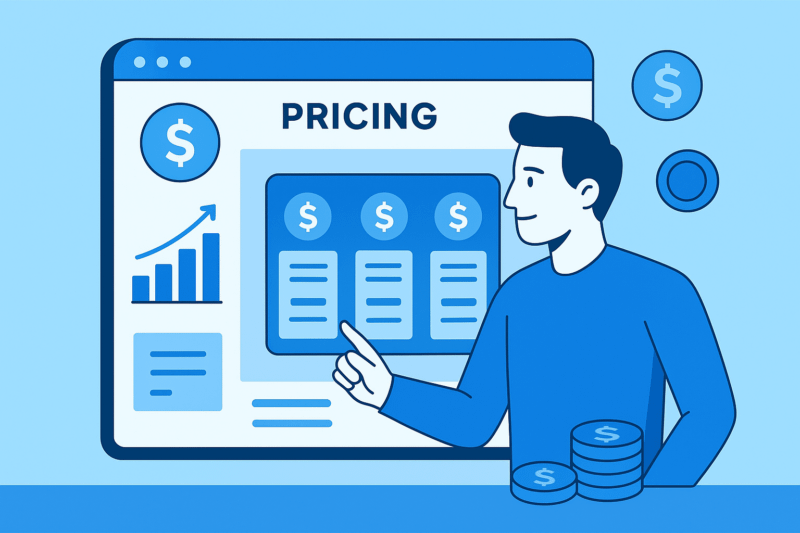
Use tiered plans to serve different segments
Tiered pricing lets you segment your users without building an entirely different product for each group. For a solo founder, this is a practical way to increase average revenue per user without increasing operational complexity too much.
In a typical tiered setup, you have a simple structure such as:
- Starter: core features for individuals or very small teams
- Growth: expanded limits and a few advanced features
- Pro: higher limits, all features, and possibly priority support
Each tier should be a clear step up in value. When someone moves to a higher plan, it should feel obvious why they are paying more.
Design lean, maintainable tiers
You want to avoid tiers that are so complex you cannot remember what each one includes. Complexity increases the chances of billing confusion and support tickets, which cost you time.
As you define tiers, focus on a few key levers:
- Usage limits such as number of projects, clients, or reports
- Access to advanced but nonessential features
- Support level such as standard email support versus faster responses
It can help to think in terms of user types. For example, you might design one tier around solo users, another around small teams, and a top tier for agencies or companies that manage multiple clients. This makes it easier to decide which features belong where.
Avoid the “too many choices” trap
More plans do not always mean more revenue. When you are solo, every extra option demands more marketing explanation, more documentation, and more edge cases in your code.
A good starting point is three plans. This keeps your pricing page easy to scan and helps users self select. You can always test a fourth plan later, such as a simple “Pay as you go” option or a higher tier, once you have more data.
Explore usage based and hybrid models
Usage based pricing, where customers pay according to how much they actually use your service, can feel fair and flexible. For some SaaS products it is a natural fit. For others, it introduces uncertainty that can scare away new users.
As a solo founder, your challenge is to balance fairness and predictability. Pure usage based billing can be tricky to estimate and explain, especially if your target audience is not very technical.
When usage based pricing can work for solo SaaS
Usage based pricing fits best when your product has a clear, countable unit of value, such as:
- Number of emails sent
- Number of API calls
- Number of reports generated
- Amount of data processed
If customers can easily predict their usage or if your product is used as needed rather than daily, a pay for what you use model may make sense. It can also lower the barrier for initial adoption because users know they only pay when they actually get something from your product.
Hybrid models keep billing predictable
For many solo founders, the sweet spot is a hybrid model that combines a base subscription with usage based elements. A common pattern is:
- A monthly or annual fee that includes a generous base allowance
- Clear overage charges if users exceed that allowance
This structure gives you recurring revenue and gives users a predictable baseline cost. If they grow, they can either pay moderate overages or move to a higher plan with better included limits.
If you decide to use a hybrid model, make sure your billing logic is simple, transparent, and tested. You want invoices to match exactly what your users expect. Surprise charges are one of the fastest ways to damage trust.
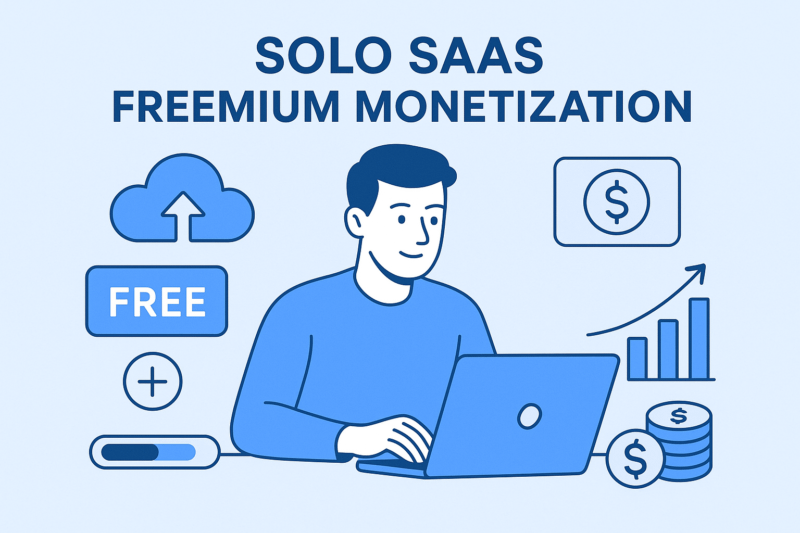
Consider freemium and free trials carefully
Freemium and free trials are some of the most attractive monetization levers for a solo SaaS, but they are also some of the easiest to misuse. Done well, they fill your pipeline with qualified users. Done poorly, they flood your support inbox and slow your progress.
You do not need a free plan to succeed. Many profitable solo SaaS products operate with paid only models, especially in markets where trust, compliance, or data sensitivity are high. The key is to align your approach with how people discover and evaluate solutions in your niche.

When a free trial is a good fit
A time boxed free trial works well when users can see value quickly and you want to encourage serious evaluation. You let someone experience your full product for a set period, then ask them to decide.
Free trials tend to be a good match when:
- Setup is quick and you can get to the main benefit in a few sessions
- Your target customers already expect trials in your category
- You have at least a basic onboarding flow or tutorial
The usual ranges are 7, 14, or 30 days. Shorter trials can create urgency, while longer ones can be better for tools used less frequently. If you are not sure, starting with 14 days can be a reasonable default, then you can experiment later.
Keeping a freemium plan under control
A freemium model gives users a permanently free tier with limited features or usage. This can spread your product widely and eventually convert free users as they grow.
However, freemium means you may be supporting a large group of people who never pay you. As a solo founder, this can drain your time and server resources.
You can keep freemium manageable by:
- Enforcing clear usage caps that push serious users to upgrade
- Restricting high cost features to paid plans
- Minimizing support promises for free users and relying more on documentation
Treat the free tier as a marketing channel rather than your main offering. Its purpose is to let people experience your product, build trust, and then transition to a paid plan when they depend on your tool.
Use one off payments and add ons strategically
While subscription revenue will probably be your core, one off payments and paid add ons can provide useful extra income and broaden your appeal. They can also make it easier for nontechnical buyers to justify working with you.
As a solo founder, you can package your time, templates, or premium features into products that complement the main SaaS subscription.
Lifetime deals and when to avoid them
Lifetime deals, where users pay once for permanent access, can generate quick cash and bring in early adopters. However, they also create a long list of users you must serve forever without additional revenue.
For a solo SaaS, lifetime deals might be reasonable only in very specific situations, such as:
- A controlled, small early adopter launch
- A product that has very low ongoing costs
- A time limited offer with a clear cap on total redemptions
If your product involves significant hosting costs, third party API fees, or frequent updates, a large number of lifetime customers can become unsustainable. In most cases, it is safer to focus on recurring models.
Productized services and premium support
Another option is to sell services that sit beside your SaaS, usually as one off or recurring add ons. Examples include:
- Concierge setup where you configure everything for the customer
- Data migration from an old system into your new one
- Training sessions for a team or agency
- Priority support or a “success” package for complex accounts
These offers can be especially helpful for nontechnical customers, which matches your target audience of entrepreneurs who have ideas but lack technical skills. They get expert help and peace of mind. You get higher revenue per customer without needing to build a more complex app.
Keep your monetization model lightweight and testable
As a solo founder, your biggest advantage is speed. The best monetization models for solo SaaS products are the ones you can change as you learn, without breaking your codebase or confusing your customers.
You do not need to predict perfectly how your pricing should look two years from now. You do need a clear baseline, a way to gather feedback, and a willingness to adjust.
Start simple, then layer in sophistication
If you feel stuck, you can begin with a minimal structure like this:
- One core subscription with monthly and annual options
- Two or three tiers with clear differences based on usage or features
- A limited time free trial for new accounts
Once you see how people use your app, you can add a usage component, revise limits, introduce an add on, or test new price points. Each change should be small enough to understand whether it helped or hurt.
Communicate pricing changes clearly
Whenever you adjust your monetization model, clear communication is essential. For paying customers, aim to:
- Explain what is changing and why
- Emphasize how it helps you keep improving the product
- Maintain or “grandfather” existing terms for current subscribers when possible
People understand that costs change over time, especially for software that keeps improving. What they resist is surprise. If you keep your updates transparent and respectful, you can evolve your pricing without losing trust.
By choosing a simple, honest monetization model and refining it as you learn, you give your solo SaaS the best chance to grow into a stable, profitable business. You are not just picking prices, you are designing how your product and your income will work together for the long term.
John Beluca is a Solutions Architect and founder of Procedo, with 20+ years of experience building custom CRMs and internal tools that simplify business processes.
All author posts