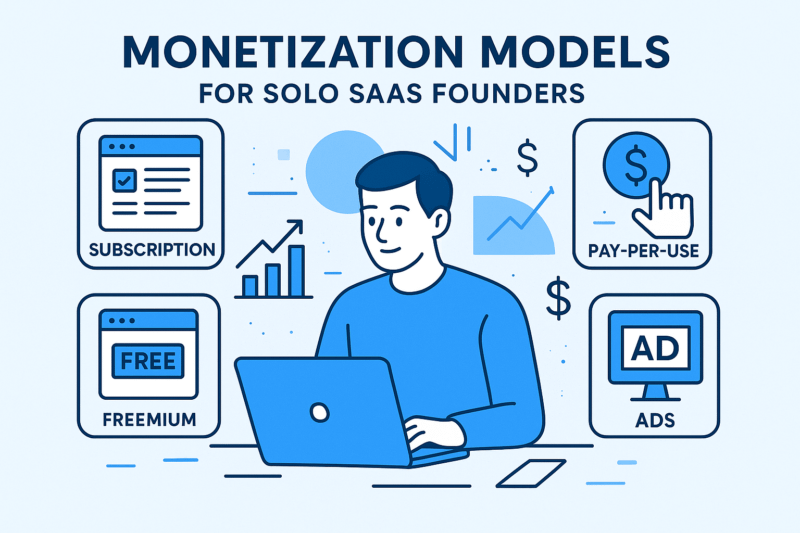
A profitable SaaS is not reserved for people who can code. If you understand a problem deeply and know the market, you already have the most valuable pieces. Learning how solo founders generate revenue without tech skills is about using the advantages you do have, then filling the gaps with the right partners and tools.
Below is a practical look at how you can turn your idea into income, even if you never touch a line of code.
Clarify the problem before the product
Revenue starts with solving a real, painful problem. You do not need an app yet. You need proof that people care enough to pay.
Begin with conversations, not features. Talk to at least 10 to 20 potential customers. Ask them how they handle the problem today, what they pay for, and what “better” would look like. Your goal is to hear the same complaints and phrases repeated across different people.
As patterns emerge, write a very short problem statement in one or two sentences. This becomes your filter. Any feature that does not directly help that statement can wait. The clearer the problem, the easier it is to sell early and generate revenue once the product exists.

Start selling value, not software
You do not have to wait for a full SaaS build to make your first dollar. You can start with services and manual work that mimic the outcome your software will eventually automate.
If your idea is an analytics dashboard, you can offer a simple “monthly reporting service” using spreadsheets. If you want to build a customer support tool, you might start by offering to streamline support processes through audits and templates.
By charging for the outcome right away, you learn three important things at once: what people are willing to pay, which results they actually value, and where your future product should focus. Early service revenue is real validation, not theoretical interest.
Use no code tools to build a first version
When you are ready to show something people can click, no code platforms let you build a minimum viable product without hiring a full engineering team.
Tools like website builders, form tools, and visual automation builders allow you to combine landing pages, simple user accounts, and basic workflows. It will not be perfect and it does not need to be. Your first version only has to do a few things well for a very specific type of user.
Think of this stage as a bridge. You are not trying to create the final system. You are trying to test whether your approach actually reduces the pain that people described in your early conversations. If customers are willing to pay for a basic version, that is a strong sign that a more polished custom build can generate real revenue.
Price for learning, then improve
Pricing is often where non technical solo founders hesitate. The temptation is to underprice in order to avoid rejection. That usually backfires because low prices send a signal that your product is optional rather than important.
Instead, begin with a simple pricing structure that you can explain in one breath. For example, a flat monthly fee for early adopters that includes both access to the tool and a limited amount of personal support from you. This approach gives you predictable income while you continue improving the product.
As you work with your first customers, pay attention to what they mention unprompted. If they keep talking about how much time they save, you might later price on usage or team size. If they keep mentioning money saved or new revenue, value based pricing may make sense. Your first prices are not permanent. They are starting points for better decisions.
Turn conversations into your first customers
For solo founders, early revenue almost always comes from personal outreach, not from a website suddenly going viral. The good news is that you already know more people than you think.
Make a short list of people who match your target customer or who might know someone who does. Reach out one by one with a direct message that focuses on their problem, not your product. Offer to walk them through what you are building and get their input.
During these calls, you are listening for two signals: that they feel the pain strongly and that they are actively trying to fix it. When both are present, invite them to become an early customer with a clear offer and a simple way to pay. Many solo founders get their first 5 to 10 paying users this way, long before they touch any paid advertising.

Use simple marketing that fits your strengths
You do not need a complex funnel on day one. Instead, choose one or two simple channels that match how you like to communicate and where your audience is already active.
If your customers spend time on LinkedIn, you might share short posts that break down the problem you solve, using real examples from your early work. If your audience listens to niche podcasts, offer to be a guest and tell the story of how you are solving a specific pain point.
Your early marketing should focus on teaching, not pitching. Each piece of content can show one small way to think differently about the problem, with a clear link or call to action for people who want your help. This kind of steady, low friction marketing often attracts more qualified leads than scattered efforts across many platforms.
Partner with technical talent instead of learning to code
At some point, no code tools and manual processes will start to strain. That is actually a good sign. It means your idea is working well enough that you need a more robust solution. You still do not need to become a developer.
Your role is to stay close to customers, define the problem clearly, and understand which features matter most. A technical partner or development team can then turn that clarity into reliable software.
Treat this relationship as an extension of your strength, not a replacement for it. The more specific you are about workflows, edge cases, and what “success” looks like for users, the easier it will be for a technical expert to build something that supports your revenue goals instead of distracting from them.
Keep improving based on real usage
Once people are paying, your decisions should be guided by what customers actually do, not only what they say. Watch which parts of the product they use often and which features they ignore. Notice where they get stuck or ask for help.
You can schedule regular check ins with your highest value customers to understand how your product fits into their workday. Simple questions like “what would you miss most if this disappeared tomorrow” reveal which features are truly tied to revenue.
Use this information to decide what to improve, what to remove, and what to build next. Small changes that make onboarding smoother or reports clearer can have a direct impact on retention, referrals, and the confidence you feel when you quote higher prices to new customers.
Focus on outcomes, not tools
The common thread in how solo founders generate revenue without tech skills is focus. You focus on a concrete problem, you focus on people instead of features, and you focus on outcomes instead of tools.
You do not need to master every platform or framework. You need to understand your customers well enough that any tool or technical partner can slot into a clear plan. When you keep that responsibility, your lack of coding experience stops being a limitation and starts being a reminder to build only what moves the needle.
If you continue to validate your ideas with real conversations, offer value in simple forms before you automate, and grow your product based on usage rather than guesswork, you can build a profitable SaaS as a solo founder while staying firmly in your zone of strength.
John Beluca is a Solutions Architect and founder of Procedo, with 20+ years of experience building custom CRMs and internal tools that simplify business processes.
All author posts