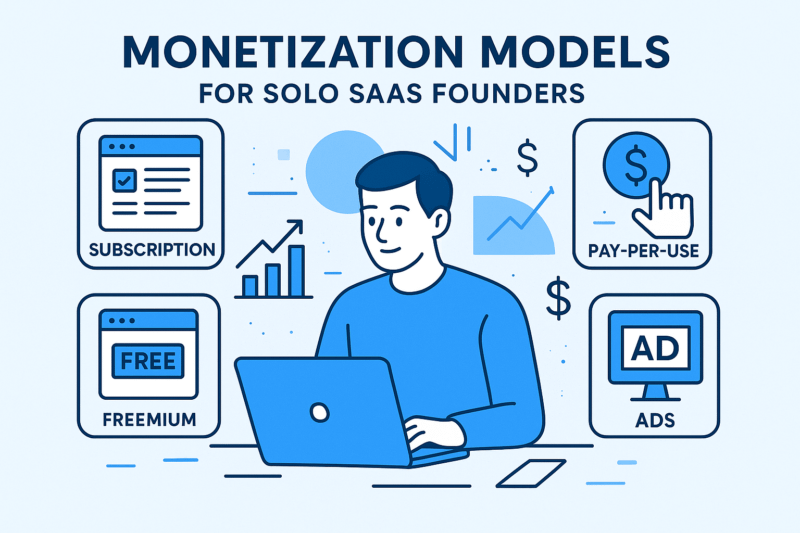
A smart freemium plan can turn your solo SaaS from “interesting idea” into a real revenue engine. When you pick the right solo SaaS freemium monetization tactics, you get the best of both worlds. You lower the barrier for people to try your product, and you still give yourself clear paths to meaningful, recurring revenue.
Below, you will find a practical, no‑fluff guide to help you design freemium in a way that fits your product and your skills, even if you are a non technical founder working with a development partner.
Understand what “freemium” should do for you
Before you sketch out pricing pages or feature grids, you need to decide what role freemium plays in your business. Freemium is not just “a free plan.” It is a marketing channel, a sales funnel, and a product experience, all rolled into one.
If you clarify its job early, every other decision becomes simpler.

Define the goal of your free tier
Ask yourself, “What does success look like for my free users?” A few common goals are:
- Collecting qualified leads who are a good fit for your paid plan
- Encouraging word of mouth by making it easy to invite others
- Seeding future power users who will upgrade when their needs grow
- Building trust in a brand that is new or unknown
You might be tempted to say “all of the above,” but choose a primary goal. If the main purpose of the free tier is to generate high intent leads, then your product and onboarding should nudge users toward core value quickly and highlight the benefits of upgrading. If your main goal is virality, you will prioritize collaboration features or sharing flows.
Decide what “win” your free users should get
A common mistake is making the free plan either too weak or too generous. You want free users to achieve a genuine win so they stick around and advocate for you, but you also want them to feel natural friction as they grow.
A helpful way to think about this is:
Give away “aha moments,” charge for “habit moments.”
Your free plan should let someone experience the core value of your product at least a few times. Your paid plans should make it easier, faster, or more powerful to get that same value over and over.
Choose the right freemium model for solo SaaS
Your solo SaaS freemium monetization tactics start with the basic shape of your free offer. There is no one right model, only models that fit better or worse depending on what your product does and who it serves.
Common freemium patterns to consider
Here are four classic approaches that work well for solo or small SaaS products:
Feature limited freemium
Users get the basics at no cost, and advanced features sit behind a paywall. This works nicely if your product has a clear “power user” layer, such as automation, analytics, or integrations.Usage capped freemium
Everyone has access to all features, but only up to a certain usage cap. Think limits on number of projects, contacts, or reports. This is ideal if more usage directly signals more value and a higher willingness to pay.Time limited free tier or trial hybrid
Users can use everything for a limited time, then drop down to a smaller free plan or decide whether to upgrade. This is effective if your product is complex and people need full access to see the real benefit.Seat based or collaboration based freemium
Solo users are free, teams pay. This fits tools where collaboration is the main driver of value, such as docs, project management, or sales tools.
Each approach affects how quickly you see revenue and what kind of users you attract. A very generous feature limited plan tends to attract freelancers and hobbyists. A tight usage cap tends to attract businesses that are willing to pay once they bump into growth ceilings.
Design a free tier users love, not just tolerate
Once you have the rough model, you can shape the day to day experience of your free users. This is where you turn a generic free plan into a growth engine.
Map your value path from day zero
Think through the first week for a new user:
- What is the first action they should take to feel progress?
- What must they complete to experience the “aha” moment?
- What, specifically, will convince them the product is worth keeping?
Design your onboarding around these steps. Use simple, guided flows that help users create one real project, import a small batch of data, or run a first simple report. The faster they see real results, the more likely they are to keep using your product and eventually convert.
Balance generosity and urgency
Your solo SaaS freemium monetization tactics will fall flat if users feel pressured too early or tricked by invisible limits. Be transparent about what is free and what is not. Make limits visible inside the product, not just buried on a pricing page.
A healthy balance usually looks like this:
- The free plan solves a narrow, real problem in a repeatable way
- The paid plan unlocks scale, collaboration, or advanced control
- Upgrade prompts appear when users are already leaning into heavy use
When a user hits a limit, frame it as a milestone, not a punishment. For example, “You have scheduled 20 posts this month, great work. Upgrade to continue your streak without interruption.”
Turn product usage into natural upgrade moments
You do not need aggressive pop ups to convert free users. You need the right message in the right moment, aligned with what the user is already trying to do.
Use contextual, in product prompts
Instead of generic “upgrade now” banners, connect upgrade prompts to actions:
- When someone tries to add a 3rd project on a 2 project free limit
- When they create a team and invite a second collaborator
- When they attempt to export data, integrate with another tool, or set automation
Your copy can stay simple and friendly. Explain what is happening, what the user gains by upgrading, and what the cost is. Whenever possible, add a quick comparison to reinforce the decision, such as “Stay on Free for basic projects. Choose Pro if you want unlimited projects and custom branding.”
Offer light personalization in your messaging
Your freemium users are not all the same, so your upgrade prompts should not be identical either. Even basic segmentation helps:
- New users still exploring should see education and guided tours
- Power users near limits should see ROI‑focused messaging
- Business accounts should see benefits like priority support or security
You do not need a complex system at first. Simple rules like “show this one message to anyone over 80 percent of their limit” can meaningfully improve conversions.

Use pricing and packaging to support your freemium strategy
Freemium is tightly connected to how you structure your paid tiers. If your plans are confusing or misaligned with the free experience, you will lose upgrades that should have been easy wins.
Start with one clear paid plan
As a solo founder, your time is limited. A single, well positioned paid plan is often better than three vague tiers. You can always expand your pricing structure later once you understand your customers more deeply.
Consider starting with:
- A focused free plan that does one job well
- One “Pro” or “Growth” plan that most paying customers should choose
Keep the first paid step affordable compared to the value your product creates. If your tool saves someone a few hours a month, or replaces another paid service, you can price with confidence. You do not need a race to the bottom.
Communicate value, not just features
When you describe your paid plan, connect the dots between features and outcomes. For instance, instead of just listing “Automations, Integrations, Priority Support,” explain what they mean for the user.
A short, outcome focused line like “Save hours each week by automating repetitive tasks and connecting your existing tools” helps visitors see themselves benefiting from your product, which is critical in the moment they consider upgrading.
Encourage free users to invite others
Freemium works best when your happy users naturally bring in more people. Even as a solo founder, you can build light virality into your product without a complex referral program.
Make collaboration and sharing part of the core flow
Look for natural points where users might want to involve someone else. Can they share:
- A report or dashboard
- A project or task list
- A template or workflow they built
If inviting another person makes their own experience better, they will do it more often. This not only increases product stickiness, it also brings in new free users who may eventually convert to paid plans.
Layer in simple referral rewards later
Once your product has steady usage, you can add basic incentives, such as:
- Extra usage credits for each referred user who activates
- Temporary access to a premium feature
- A discount on the first paid month for both sides
Keep the mechanics simple enough that you can manage them without building an entire referral platform on day one.
Track the metrics that actually matter
Your solo SaaS freemium monetization tactics should be guided by data, but you do not need an enterprise analytics setup. A handful of clear metrics will tell you whether your free tier is healthy.
Focus on activation, engagement, and conversion
At a minimum, pay attention to:
Activation rate
The percentage of signups that reach a defined “aha” moment, such as creating a project, connecting a data source, or completing a setup checklist.Engaged free users
How many free users come back and use your product regularly. This tells you whether the free plan is providing ongoing value or just attracting tourists.Free to paid conversion rate
The percentage of free users who eventually upgrade within a given time frame, usually 30 to 90 days.
If activation is low, improve onboarding first. If engagement is low, revisit your free plan’s usefulness and habit‑forming aspects. If conversion is low but engagement is strong, consider adjusting your limits or making the benefits of paid more obvious.
Work with a technical partner to implement ideas quickly
If you are a non technical founder, you do not have to implement every idea yourself. A trusted development partner can help you translate your freemium strategy into real product changes, while you stay focused on understanding your customers.
Start by sketching user flows, upgrade triggers, and a simple feature matrix on paper or in a basic design tool. Then, collaborate on a small set of high impact changes, such as adding usage limits, building an in product upgrade dialog, or improving onboarding tours.
When you treat your solo SaaS freemium monetization tactics as a living system instead of a one time decision, you give your product room to grow with your users. Launch a clear, well defined free plan, watch how people use it, then refine your offer step by step. Over time, your freemium experience becomes not just a way to attract users, but a reliable engine for recurring revenue.
John Beluca is a Solutions Architect and founder of Procedo, with 20+ years of experience building custom CRMs and internal tools that simplify business processes.
All author posts