A profitable SaaS does not start with fancy funnels or paid ads. For solo founders, it starts with a clear plan for how you make money and how quickly you can prove that someone will pay.
The right solo founder monetization strategies help you do both. They let you launch lean, learn fast, and grow in a way that fits your skills, your schedule, and the kind of business you want to run.
Below, you will find practical ways to monetize as a non technical solo founder, with examples, trade offs, and ideas you can test quickly.
Start with the problem, not the pricing
Before you pick a monetization model, you need a problem that is painful enough for people to pay to solve. Your pricing, packaging, and growth options all flow from this.

Spend time answering three questions:
- Who are you solving a problem for, as specifically as possible
- What recurring pain or workflow headache are you removing
- How does your product meaningfully save or make them money
When you are clear on these, you can choose a monetization approach that feels natural, instead of bolting random price tags onto features. You can dig deeper into big picture options in this guide to how solo founders generate revenue.
Choose a simple monetization model to launch with
You do not need a complicated revenue stack in the early days. In fact, too many options can slow you down and confuse customers. Pick one main way you will get paid and commit to testing it for a few months.
Common solo founder monetization strategies include:
- Subscription plans
- One time lifetime deals
- Services plus software hybrids
- Usage based or metered pricing
You can add layers later. At the start, your goal is to get to your first ten paying customers on a model you understand and can explain in one sentence.
Use subscription pricing to build predictable revenue
For SaaS, subscriptions are often the default for a reason. Recurring revenue gives you stability, a clearer view of cash flow, and a strong foundation for long term growth.
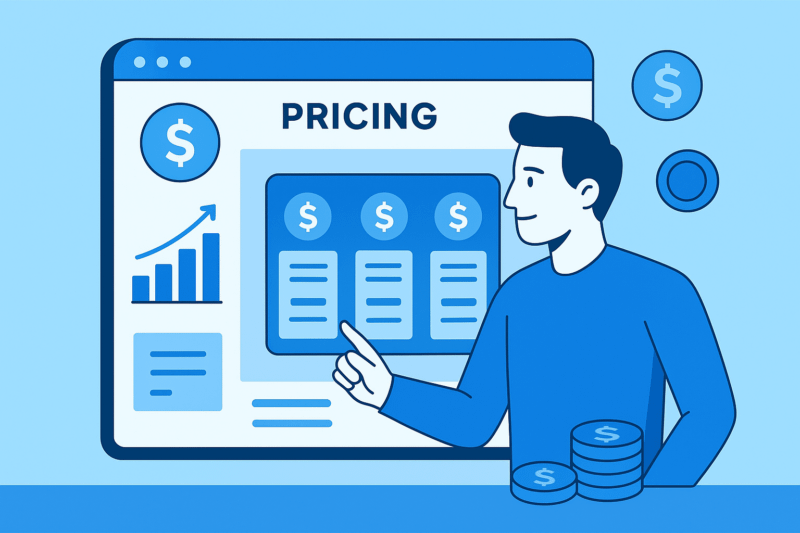
Start with value based tiers
Begin with two or three plans, not five or six. Anchor your tiers around outcomes and usage, not a long feature checklist.
For example, instead of:
- Basic, 10 features
- Pro, 20 features
- Enterprise, everything
Try something like:
- Starter, for solo consultants managing up to 5 clients
- Growth, for small agencies managing up to 25 clients
- Scale, for teams managing 25+ clients and custom reporting
This helps prospects see themselves in a plan and understand why they should pay more as they grow.
Match price to your confidence level
If you are new, it is tempting to start very cheap. That can hurt you later if you have to raise prices significantly once you understand your value.
A practical approach is to:
- Pick a middle of the road number based on competitors
- Add or remove, for example, 20 to 30 percent based on how specialized you are
- Plan to review your pricing every 3 to 6 months as you learn
You can always grandfather early customers or offer loyalty discounts if you increase prices.
Offer lifetime deals to validate quickly
Lifetime deals can be a useful tool if you need fast validation or early cash. Instead of recurring revenue, customers pay once for long term access.
These work best when:
- Your product is early and you want motivated power users
- You have very low marginal costs for adding new customers
- You are comfortable providing support to those early adopters for a long time
The trade off is predictable. You get money up front, but you give up future recurring revenue from those buyers. To keep this in balance, limit your lifetime deal to a small number of customers or a short time window, and treat it as a launch or beta program.
Combine service and software for early cash flow
If you do not have technical skills yet or your app is still in progress, you can start by selling the outcome as a service first. Then, evolve toward software as you build or partner with a developer.
This hybrid approach can look like:
- Done for you implementation plus access to a simple internal tool
- A consulting package that includes a basic SaaS account for ongoing tracking
- Manual workflows behind the scenes that you later automate in code
By charging for service, you learn your customers language, validate demand, and generate revenue to reinvest, even before the product is fully built.

Use usage based pricing when value scales with activity
For some products, value is clearly tied to how much your customers use it. In those cases, usage based models can feel very fair and can grow nicely as your customers become more successful.
You might charge based on:
- Number of active users or seats
- Volume of transactions, messages, or reports
- Amount of data processed or stored
If you go this route, keep your pricing page simple. Offer clear examples so customers can estimate their bill, and consider adding soft limits or alerts so they are not surprised.
Add low friction entry points
No matter which core model you choose, you will get more traction if you lower the risk for someone to try you.
You can do this without giving everything away for free.
Options include:
- A free trial with limited time but full features
- A small, paid starter plan for side projects
- A money back guarantee for the first month
The key is to give people enough access to feel the value, while still signaling that your product is something worth paying for.
Monetize your expertise alongside the product
As a solo founder, your knowledge is an asset that can be monetized in parallel with your SaaS. This can bring in extra revenue, but it also supports the core business by building authority and trust.
You might offer:
- Paid workshops or live training sessions for your ideal customers
- A short ebook or mini course teaching the system your product supports
- Strategic consulting for teams that want hands on help using your tool
These add on offers can increase average revenue per user and diversify your income, especially early on when your SaaS revenue is still growing.
Focus on customers who can pay and will stay
Not all customers are equally valuable. Since you have limited time as a solo founder, the customers you choose to serve will shape your revenue more than any price experiment.
Look for signals like:
- Clear budget ownership inside their company
- A recurring need, not a one off project
- A strong willingness to try new tools
It can be better to charge a bit more and work with a smaller group of serious customers than to underprice for a broad audience that churns quickly.
A simple rule of thumb: if your best customers are relieved to pay you because you remove a headache, you are likely on track with your monetization.
Iterate your monetization as you grow
Your first pricing and monetization decisions are not permanent. They are drafts. As you learn who gets the most value, you should adjust what you charge and how you present it.
Set a regular schedule, for example once a quarter, to:
- Review which plans or offers bring in most revenue
- Identify the customers with the lowest churn and highest lifetime value
- Ask those customers why they chose you and what they would happily pay more for
Then update your pricing page, your plans, or your packaging to match what you learn. The goal is not to chase tiny optimizations, it is to keep your business model aligned with real demand.
Put it all together in a simple plan
You do not need to adopt every monetization tactic at once. A lean plan that you can actually execute will serve you better than a long list of ideas.
A straightforward starting approach might be:
- Launch with two or three subscription tiers focused on outcomes
- Offer a limited free trial or starter plan to reduce risk
- Consider a small, time boxed lifetime deal to fund early development
- Add a paid onboarding or workshop offer for customers who want extra help
- Revisit pricing after you have at least ten to twenty paying customers
From there, keep listening to your users, tracking your numbers, and adjusting. Over time, your solo founder monetization strategies will become a natural extension of how you serve your best customers, rather than a separate puzzle to solve.
John Beluca is a Solutions Architect and founder of Procedo, with 20+ years of experience building custom CRMs and internal tools that simplify business processes.
All author posts