What subscription monetization means for a solo founder
If you are an aspiring founder without technical skills, subscription monetization can turn your SaaS idea into predictable, compounding revenue. Instead of chasing one‑off sales, you charge customers a recurring fee in exchange for ongoing access to your product.
For a solo founder, this model matters because it gives you:
- Stable cash flow you can plan around
- Clear signals about what customers value
- A business that becomes more valuable as your subscriber base grows
If you want a deeper overview of ways you can earn from software without a big team, you can also look at how solo founders generate revenue. Here, you will focus specifically on how to use subscriptions to turn your SaaS concept into a real business.
Why subscription monetization fits solo founders
Subscription revenue is especially powerful when you are building alone or with a small partner team. You do not need a huge launch or massive sales operation. You need a focused product, a clear promise, and a simple way to charge on a recurring basis.
You are not just selling features. You are selling ongoing outcomes. For example, instead of selling a project management tool, you sell reliable project visibility every week. Instead of selling reporting software, you sell peace of mind that numbers are always up to date.
When you view your idea this way, it becomes easier to design plans, prices, and communication that customers understand and are willing to pay for month after month.

Clarify the problem your SaaS solves
Before you think about pricing or payment processors, you need a sharp view of the problem you solve. Subscription monetization only works when customers continue to experience value over time.
Start by answering three questions in plain language:
- Who are you helping
- What do they struggle with on a recurring basis
- How will your product make that specific struggle smaller or disappear
You can test your answers by talking to a handful of potential users. Describe the problem and your idea in simple terms. Listen more than you talk. If people lean in, ask follow up questions, and share their own examples, you are heading in the right direction.
If you hear vague interest but no concrete stories, your problem statement is probably too broad. Narrow it until it is easy to explain and easy for your audience to recognize in their day to day work.
Choose the right subscription model
Once you understand the problem, you can pick a subscription structure that matches both your product and your buyers. The model you choose shapes how users engage with you and how revenue grows.
Common subscription structures
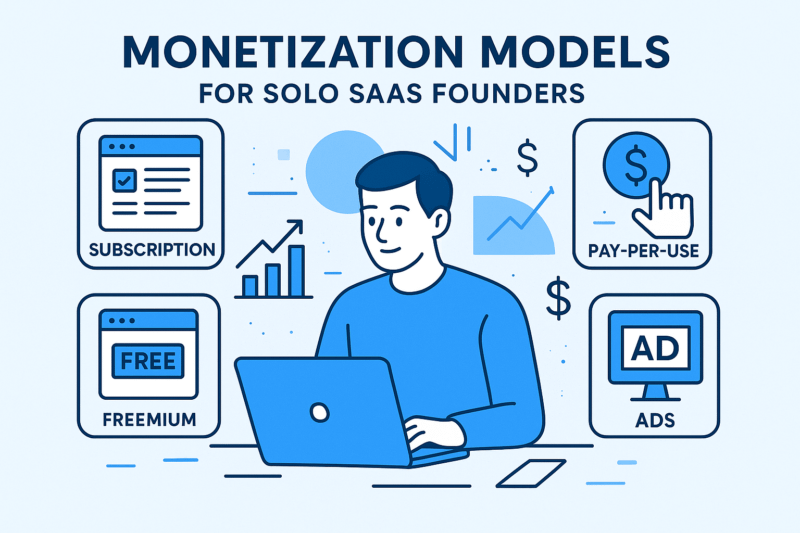
You do not need anything complex at the start. Most solo founders succeed with one of a few simple models:
Flat monthly subscription
Everyone pays the same recurring amount for access to the full product. This is the easiest to launch and explain.Tiered pricing
You offer two or three plans, such as Starter, Pro, and Business. Each tier includes more usage or features. This lets you serve different customer sizes.Per user pricing
Customers pay per team member. This works well for collaboration tools where value grows with each additional user.Usage based pricing
You charge based on a measurable unit, such as emails sent, projects created, or records stored. This can align closely with value if metered carefully.
In the early days, simplicity is your friend. You can always add complexity later once you see how customers actually use the product.
Matching your model to customer behavior
Think about how often your buyer feels the pain you solve. If it is a daily or weekly pain, a standard monthly subscription fits naturally. If usage is more occasional, a lower base subscription combined with usage based add ons can feel fairer.
Watch for misalignment. If you charge per user but teams mostly have one active power user, your revenue will stall. If you meter every little action, customers may feel anxious about exploring the product.
Aim for a setup where your ideal customers think, “This feels obvious and fair.”
Set pricing that reflects real value
Pricing can feel intimidating when you are new, especially without a technical background. You might be tempted to start very low and “see what happens.” That approach usually makes it harder to grow later.
Instead, move through a simple, structured process.
Anchor to the value, not your costs
List the outcomes your product creates for a typical customer. For example, time saved each week, errors prevented, or extra revenue enabled. Try to put rough numbers next to these outcomes. Even if the figures are approximate, they will help you sense the range of value.
Then, aim to price at a small, reasonable fraction of that value. If your product can save a small business owner five hours per month, charging the equivalent of one hour of their time is often easier to justify than you might think.
Use a clear, testable starting point
Pick one main plan as your “hero” offer and, if needed, one cheaper or more expensive option for comparison. Avoid starting with a long grid of features and five different plans.
A practical approach is:
- One entry level plan that removes the main pain
- One higher tier for power users who need more volume or advanced features
You can adjust based on actual signups and feedback. Customers who say “This is great but a bit expensive” are still interested. That is more promising than silence from people who find your underpriced offer forgettable.
Design a subscription experience customers want to keep
Subscription monetization is not just about collecting payments. It is about delivering a steady stream of value so customers happily renew.
Make onboarding fast and focused
Your new user should feel an early win within the first session. Choose one or two key actions that move them toward the result they want. Design your onboarding so those actions are front and center.
For example, if your tool helps schedule social media posts, your onboarding might simply be:
- Connect one social account
- Create and schedule the first post
Once that is done, your user has already experienced the core value. You can introduce advanced features later through guided tips and emails.
Communicate progress and outcomes
Customers are more likely to keep paying when they can see the difference your product is making. You can:
- Send simple weekly or monthly reports that highlight results
- Show progress dashboards inside the app
- Share small, contextual tips that help them use the product more effectively
These do not have to be complex. The goal is to gently remind users, “This is working for you.”
Make cancellation low friction and informative
It can feel scary, but making it easy to cancel actually builds trust. A simple, respectful cancellation flow also gives you valuable feedback. Ask one short question about the main reason for leaving. Look for patterns over time.
When you treat departing customers well, you leave the door open for future reactivation or referrals.

Tools and partners that handle the technical work
If you have a strong idea but lack coding skills, the technical side of subscription monetization can feel like a wall. The good news is that you have several options that do not require you to become a developer.
No code and low code options
Modern no code tools let you build interfaces, connect databases, and integrate payments visually. You can combine:
- A no code app builder to create your front end
- A hosted database or spreadsheet for data storage
- A payment provider for recurring billing
Each of these services usually comes with templates and guides. While there is still a learning curve, it is much lower than traditional development, and you stay in control of the business logic.
Technical partners and development studios
If you prefer to focus on strategy, marketing, and customer relationships, you can partner with developers or studios that specialize in bringing non technical founders’ ideas to life.
When you evaluate a partner, look for:
- Experience with SaaS and subscriptions specifically
- Clear communication about timelines and costs
- A process for iterating after launch, not just delivering version one
You lead with your understanding of the customer and the problem. Your partner handles infrastructure, integrations, and ongoing technical maintenance.
Track the metrics that matter most
You do not need a complex analytics setup, but a few core numbers will help you understand whether your subscription monetization model is working.
Key metrics for solo founders
Focus on:
Monthly recurring revenue
The total predictable revenue from active subscriptions. This helps you see growth clearly.Churn rate
The percentage of customers who cancel in a given month. If this is high, you may have onboarding or value issues.Activation rate
The share of new signups who complete your key “first success” action. This is closely tied to long term retention.Customer acquisition cost
The average cost of getting one new paying user. This keeps your marketing experiments grounded.
You can track these with a mix of your payment tool’s reports and a simple spreadsheet. As you grow, you can layer more sophisticated analytics on top.
Turn your SaaS idea into recurring revenue
Subscription monetization as a solo founder is not about building the most complex product. It is about consistently delivering a result people care about and charging fairly for ongoing access to that result.
You clarify the problem, choose a simple subscription structure, set value based pricing, and design an experience that customers are happy to keep paying for. With no code platforms and trusted technical partners, you do not need to write the code yourself to own a SaaS business.
Start by writing a one page description of your ideal customer, their recurring pain, and the outcome your product will deliver month after month. Treat that page as your guide. Every choice you make about features, pricing, and communication should support that promise.
John Beluca is a Solutions Architect and founder of Procedo, with 20+ years of experience building custom CRMs and internal tools that simplify business processes.
All author posts