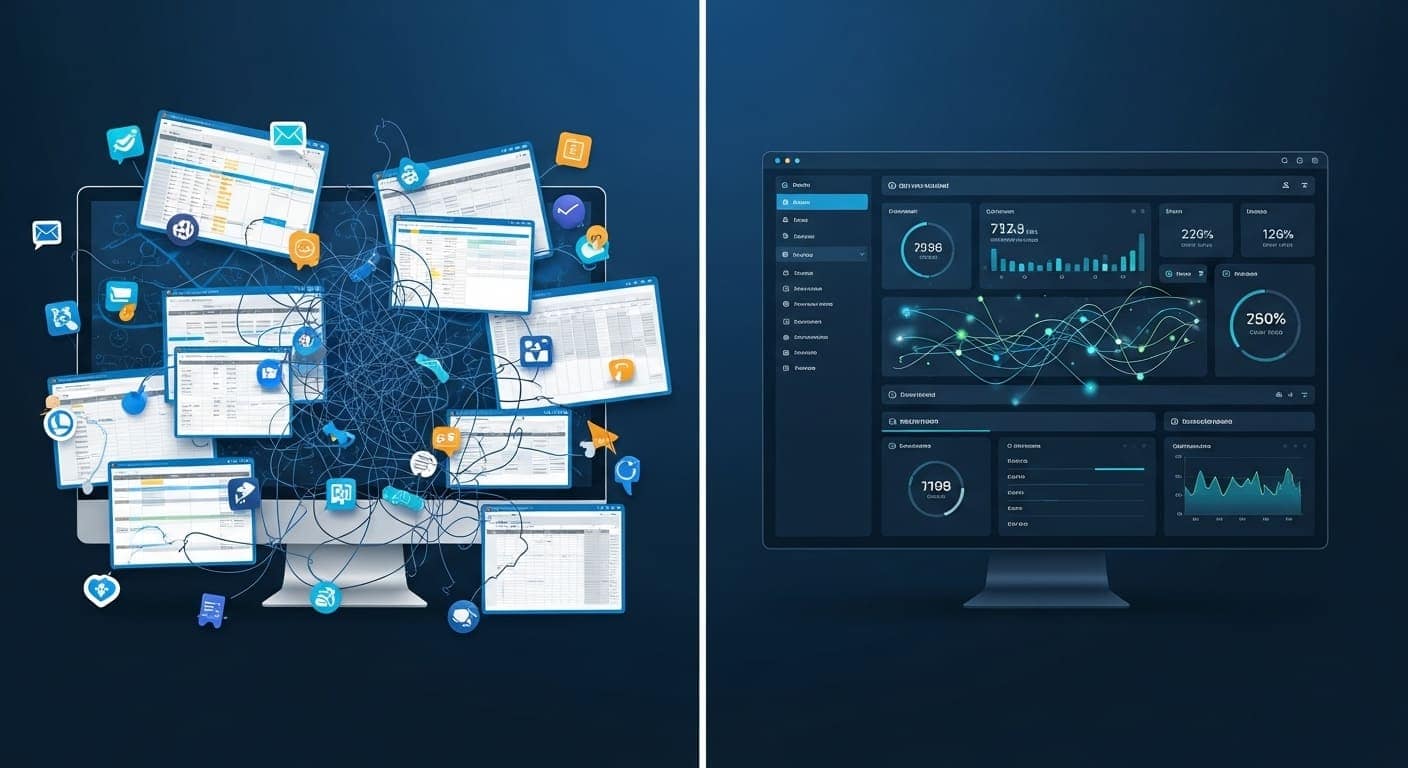
Many growing businesses evolve faster than their technology. Teams start with a few spreadsheets, add a project tracker, then a CRM — and soon data spreads across tools that don’t connect. What begins as a flexible setup becomes a patchwork system. It limits visibility, slows work, and makes scaling difficult.
This problem is more common than leaders think. Off-the-shelf software may solve a short-term need, but it rarely fits perfectly. Over time, using many disconnected tools creates friction that slows the whole business. Custom internal tools change that. They don’t add complexity — they simplify. They bring operations together, connect data, and build a solid base for growth.
The Hidden Costs of Fragmented Systems
A fragmented system doesn’t crash all at once. It fails slowly and quietly. Teams spend hours copying data, fixing reports, and checking numbers that don’t match. Temporary fixes turn into daily habits.
The cost goes far beyond time. When data is messy, decisions lose quality. Teams act slowly because they don’t trust their numbers. Departments work in silos, each using different information. The result is the same everywhere: delays, confusion, and missed chances.
Legacy systems and spreadsheets often cause these problems. They worked well when teams were small. But as a company grows, those old systems start holding it back.
Why Internal Tools Change Everything
Custom internal tools fit your business instead of forcing you to fit them. They follow your real workflows and priorities. When you bring everything into one place, teams stop wasting time switching between apps.
A single source of data also improves accuracy. Information updates instantly, so everyone sees the same numbers. Automation removes repetitive work and reduces human error. People spend less time managing tools and more time creating results.
Internal tools also grow with your company. Unlike spreadsheets or old systems that can’t handle complexity, custom platforms expand easily. As your needs change, your system changes with you.
When your team works through a strong internal tool, everything becomes smoother. Collaboration improves, decisions come faster, and innovation replaces frustration.
From Patchwork to Precision
Imagine a mid-sized company handling client onboarding by email, tracking projects in Trello, managing billing in Excel, and measuring results in Google Sheets. Each team uses a different format. Leaders spend hours pulling reports that never match.
A single internal platform changes everything. The team tracks clients in real time, runs instant reports, and moves tasks automatically between departments. Communication becomes easier. Everyone knows what’s happening and what to do next.
This change goes beyond software. It transforms how people work. Teams align around shared data and shared goals. Leaders see faster results and stronger cooperation. Clients feel the difference in service and response time.

Building for Long-Term Efficiency
Great internal tools start with a clear look at your pain points. Where does data get lost? What slows your team down? What tasks could automation handle? Each answer shapes a tool that makes work simpler and faster.
At Procedo, we’ve seen many businesses evolve this way. When they replace a mix of old systems with one clear platform, they gain efficiency and focus. Teams collaborate better and innovate faster. Once operations align, every department — from finance to customer success — moves together. That unity builds strength today and flexibility for tomorrow.
Turning Awareness into Action
If your team still relies on spreadsheets or scattered software, you’re not alone. But you are at a key moment. Seeing the cost of inefficiency is the first step toward change.
Custom internal tools do more than replace software. They reshape how your business runs. They turn scattered data into insight and replace friction with flow.
Now is the time to move past patchwork systems — and build a foundation for clarity, connection, and growth.
John Beluca is a Solutions Architect and founder of Procedo, with 20+ years of experience building custom CRMs and internal tools that simplify business processes.
All author posts