Understand automation in agribusiness operations
If you run a small or mid-sized agribusiness, automation in agribusiness operations can feel both exciting and overwhelming. You might picture giant robots in mega-farms and assume the technology is out of reach. In reality, modern automation often starts with software that quietly connects your existing tools, reduces manual work, and gives you better data for everyday decisions.
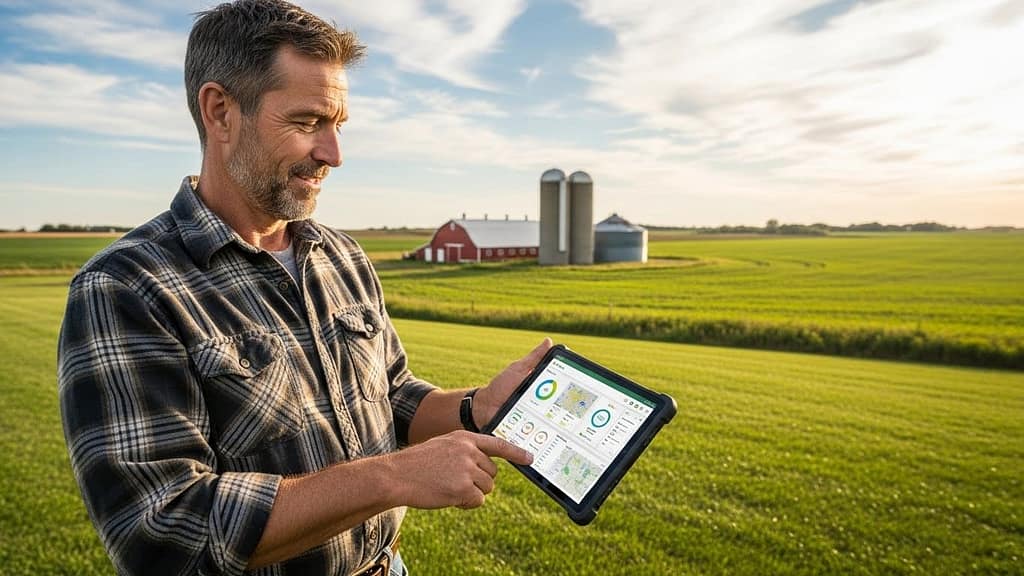
Agricultural automation covers far more than self-driving tractors. It includes:
- Software that syncs field, packing, and accounting data
- Sensors and IoT devices that monitor soil, water, or livestock
- AI tools that forecast demand or optimize planting and harvest windows
- Automation rules that move information between systems without data re-entry
These technologies are already a major industry. The global smart agriculture market that includes automation and precision farming is valued at about $22 billion and is growing at 13.7% per year as of 2024. At the same time, AI in agriculture is projected to nearly triple from $1.7 billion in 2023 to around $4.7 billion by 2028, as more farms adopt data-driven tools.
For you as a small agribusiness operator, the opportunity is not to chase every new gadget. It is to choose practical software automation that makes your daily operations simpler, leaner, and more profitable.
Recognize why automation matters now
You probably already feel the pressure that is pushing automation forward in agribusiness.
Labor is harder to find and keep
Farm labor shortages are not news. Automation technologies in U.S. agriculture, from robotic harvesters to automated feeders, have grown partly to reduce the physical and mental load on workers and to remove some of the drudgery from farm work.
This does not always mean fewer jobs. Often, roles shift from repetitive manual tasks to higher skilled work, such as operating and maintaining automated systems. That shift is already visible on modern farms that rely on advanced machinery and sensors.
Margins are tight and inputs are costly
Fertilizer, fuel, and feed are not getting cheaper. Precision agriculture technologies let you apply inputs exactly where needed, instead of blanket coverage. Auto-steering, variable rate application, and sensor-driven irrigation can reduce waste and improve yields. Even small changes can add up over a season.
Smart irrigation systems, for example, can cut water use by up to 30 percent while maintaining or improving crop performance, according to recent automation studies. If your software can read sensor data and trigger or recommend irrigation decisions, that becomes a direct savings line on your budget.
Customers and regulators expect more transparency
Buyers and regulators increasingly ask for traceability, sustainability metrics, and documentation. Automation in agribusiness operations makes it easier to:
- Track lots and batches across fields, storage, and shipping
- Keep records for audits without digging through paper
- Monitor and document water, fertilizer, and pesticide use
Instead of scrambling each time a buyer wants more documentation, you can generate reports directly from your system.
Technology is becoming more accessible
Historically, advanced automation was something only large operations could afford. That is changing. Two trends are especially helpful for small and mid-sized agribusinesses:
- Precision agriculture platforms and sensors are becoming more affordable and user friendly, even for smaller operations
- Agriculture Technology-as-a-Service (Agri-TaaS) is emerging, so you can pay for automation tools by subscription or usage instead of large upfront purchases, with the Agri-TaaS market expected to exceed $3 billion by 2025
The result is that you no longer have to buy everything outright. You can start small, test tools, and scale up what works.
Explore key types of agribusiness automation
Automation in agribusiness operations covers a wide range of tools. To keep things practical, it helps to sort them into a few major categories.
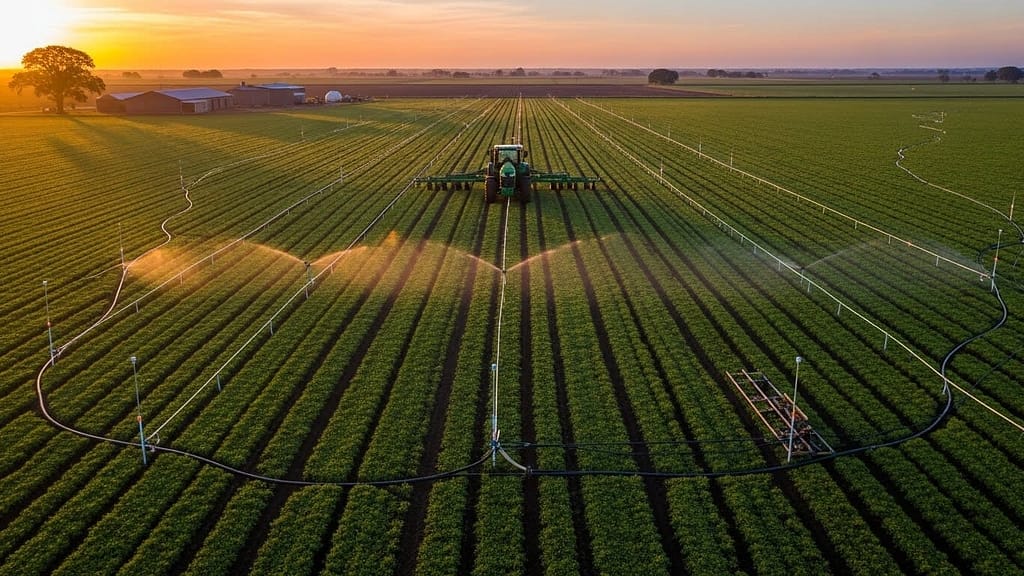
Software automation for daily operations
This is often the best starting point for small agribusinesses, because you can quickly reduce manual paperwork and data entry.
Common examples include:
- Farm management software that tracks fields, tasks, and inputs
- Work order systems that assign and track jobs for staff
- Inventory and lot tracking that sync with your packing or processing line
- Accounting and invoicing integrations that pull in production data
If you are exploring tools, you might come across solutions like small farm automation software or more comprehensive agribusiness process automation software. These can centralize key workflows so you are not juggling spreadsheets, notebooks, and text messages.
Field and equipment automation
Field automation focuses on making planting, spraying, and harvesting more precise and less labor intensive.
Key technologies include:
- GPS-guided and autonomous tractors that follow rows with minimal operator fatigue
- Variable rate application systems that adjust fertilizer or water based on soil maps
- Robotic harvesters for specialty crops where labor shortages are severe
- Drones and sensors that scan fields for crop health, pest pressure, or moisture
These tools help you put the right amount of input in the right place at the right time, which is the foundation of precision agriculture.
Livestock and facility automation
If you manage animals or controlled environments, you have additional automation options:
- Robotic milking systems that reduce labor and collect detailed production data
- Automated feeders and smart collars that track animal health and activity
- Climate and irrigation control in greenhouses or vertical farms
- Sorting and grading systems for eggs, produce, or carcasses
Indoor agricultural automation, such as vertical farms and high-tech greenhouses, is a rapidly expanding $7 billion global market growing at about 20 percent annually, driven by robotic arms, gantries, and automated conveyors that allow year-round production close to consumers.
Data and decision support automation
Behind the scenes, many modern agribusinesses are using AI and analytics to improve planning and market timing.
Examples include:
- AI-driven predictive analytics that combine weather forecasts, soil data, and historical yields to suggest planting or harvest windows
- Price and demand forecasting tools that guide storage, contracts, and sales
- Farmer-owned data co-ops that pool information to gain better insights without compromising privacy
The AI in agriculture market is projected to grow significantly through 2028, which means more tools will appear on the software side to help you interpret data, not just collect it.
See how automation boosts productivity and profit
The core reason to invest in automation in agribusiness operations is simple. You want to do more with the same or fewer resources, without burning yourself and your team out.
Here are some of the main benefits you can expect when you choose the right tools.
Reduce manual work and errors
If you or your staff are retyping the same numbers into multiple systems, that is an immediate target for software automation.
For example, you can:
- Have field workers log completed tasks on a mobile app instead of paper
- Automatically sync harvested quantities from your packing line into inventory
- Push packing and shipment data directly into invoicing and accounting
Each manual handoff is a chance for delays and mistakes. Automating these handoffs frees up time and improves accuracy.
Improve input efficiency and yields
Precision agriculture and robotic systems are designed to apply water, fertilizer, and pesticides only where needed, instead of across entire fields.
With the right setup, you can:
- Use soil moisture sensors and smart irrigation to fine tune watering schedules
- Apply fertilizer at variable rates based on soil nutrient maps
- Target pest control only to affected areas identified by drones or sensors
Studies show that smart irrigation systems can significantly cut water use and that variable rate application improves both profitability and environmental outcomes.
Strengthen planning and decision making
Automation is not just about physical labor. It also upgrades your information flow.
With AI and analytics tools, you can:
- See real-time dashboards of field work, inventory, and orders
- Compare actual yields to plans and adjust mid-season
- Forecast labor needs based on task backlogs and weather trends
- Plan marketing and sales around more accurate production forecasts
Having data in one place means you can answer common questions in a few minutes instead of a few days.
Improve worker safety and satisfaction
Automation technologies in U.S. agriculture are already helping remove some of the most physically demanding and repetitive tasks. That can make your agribusiness a more attractive place to work.
By automating:
- Heavy lifting or repetitive movements
- Hazardous tasks, such as certain chemical applications
- Night-time or extreme weather operations through remote monitoring
You can focus your team on higher value work. That often means training workers to operate and maintain equipment, which can lead to more stable and skilled roles rather than purely seasonal labor.
Support sustainability and compliance
Automated systems make it easier to align with environmental and regulatory goals.
For instance:
- Auto-steering and precise application help reduce chemical and fertilizer use, which aligns with European Union targets like cutting chemical pesticide use by 50 percent and fertilizer use by 20 percent by 2030
- Detailed records from sensors and controlled equipment simplify audits and certifications
- Better water, soil, and air monitoring supports long-term soil health and biodiversity
In many markets, sustainability performance is now a selling point as well as a compliance requirement. Automation helps you measure and prove what you are doing.
Understand the challenges and risks
Automation in agribusiness operations is not always simple or risk free. Being aware of the main challenges will help you plan more effectively.
High upfront costs and complexity
Advanced automation, especially robotics and autonomous machinery, can be expensive. This is one reason only about 27 percent of U.S. farms used precision agriculture practices like variable rate fertilizer and yield monitoring between June 2022 and June 2023.
Common barriers include:
- Large capital costs for new equipment and supporting infrastructure, such as charging stations
- The need for reliable connectivity and power in rural locations
- Integration issues between different brands and systems
For smaller operations, this is where software-based and subscription models are often more realistic than buying heavy hardware outright.
Uneven access and risk of inequality
The 2022 FAO State of Food and Agriculture report highlights that automation can deepen inequalities if only larger, wealthier, and better educated producers can adopt new tools. Smaller farms, women, and rural youth often face more barriers, from financing to training.
You can manage this risk on your own operation by:
- Involving your existing workers in technology decisions and training
- Choosing tools that match current skill levels and offering clear training paths
- Looking for programs and grants that support automation adoption for smaller farms
Workforce transition and training needs
Automation does not always reduce the number of workers, but it does change the type of work needed.
Experts suggest that achieving proficiency with agricultural robotics and automation systems can require 200 to 300 hours of training per worker. That is a significant investment, so you want to plan ahead.
Consider:
- Which team members are most interested in technical roles
- How you will schedule training around peak seasons
- Whether vendor training, local colleges, or extension programs can support you
Transparent communication about why you are adopting automation and how roles might change is crucial for trust.
Environmental and structural constraints
Automation is not a magic fix if your operation faces structural challenges like:
- Highly fragmented land that makes auto-steering and robotic systems difficult to use
- Poor roads, unreliable electricity, or weak connectivity
- Soil conditions that are not suitable for heavy machinery due to erosion or compaction risks
On the environmental side, the FAO warns that poorly managed automation can contribute to deforestation, soil degradation, and biodiversity loss. On the positive side, smaller AI-driven equipment and smart policies can help avoid those problems if you plan carefully.
Map out where software automation fits your operation
Before you invest in hardware or robotics, it almost always pays to get your information flows under control. Software automation is the backbone that keeps everything else coordinated.
Here are some core areas where software can streamline your agribusiness.
Link planning, field work, and inventory
If you are like many operators, you might plan your season in one tool, record fieldwork in another, and then track inventory somewhere else.
With the right software, you can:
- Create plans for planting, fertilizing, and spraying, then turn them into tasks
- Let workers log completion in real time via mobile devices
- Automatically update inventory of inputs used and produce harvested
- Track lots from field to storage to customer
A solution such as farm operation automation software can connect these steps so information moves automatically and you see the full picture without manual consolidation.
Automate routine office work
Back-office tasks are some of the easiest to automate, and they often produce quick wins.
Look for options to:
- Automatically generate purchase orders when inventory drops below a threshold
- Create invoices based on shipments or deliveries logged in your system
- Sync transactions with your accounting software
- Send reminders for unpaid invoices or contract milestones
These kinds of workflows can save you hours every week and reduce bookkeeping errors.
Standardize data collection and reporting
Many audits, certifications, and buyer requirements boil down to one question. Can you show that you are doing what you say you are doing?
Automation helps by:
- Collecting data directly from sensors, equipment, or worker apps
- Storing that data in a consistent format
- Generating reports for yield, input use, traceability, and worker safety
When you standardize data collection, you are also preparing your operation for more advanced AI and predictive tools later on.
Integrate external tools and platforms
You may already use several systems: equipment consoles, weather apps, spreadsheets, and buyer portals.
Integration platforms are emerging that can connect these data streams across different brands and systems. They typically focus on:
- Open architecture, so you are not locked into a single vendor
- Support during setup and ongoing maintenance
- APIs and connectors that move data in and out of your core management system
By choosing automation tools designed to integrate, you avoid building a patchwork of disconnected apps.
Plan your automation strategy step by step
You do not need a multi-million dollar budget to start with automation in agribusiness operations. What you need is a clear, staged approach.
1. Map your current processes
Start by writing down how your operation actually works today. Keep it simple and honest.
For each major area, such as field work, packing, sales, or accounting, note:
- What triggers the work
- Who is involved
- What tools or documents are used
- Where the biggest delays, errors, or frustrations occur
This is your reality baseline. It will highlight where automation would have the most impact.
2. Identify high-value automation opportunities
Next, look for processes that are:
- Repetitive and time consuming
- Prone to mistakes
- Dependent on one person who acts as a bottleneck
- Critical for compliance or customer trust
Typical early candidates are:
- Data entry from field notebooks into spreadsheets or accounting software
- Manual inventory counts and updates
- Scheduling and assigning work across teams
- Generating recurring reports for buyers or regulators
These are often solvable with accessible tools that do not require new heavy equipment.
3. Set clear goals and metrics
Before buying any tool, define what success looks like. For example, you might aim to:
- Cut manual data entry time by 50 percent within six months
- Reduce input usage by 10 percent in the next season
- Improve on-time order fulfillment to 98 percent
Choose one to three metrics that matter to your business, and later measure against them.
4. Start small with pilot projects
Pick one or two processes to automate first. Keep your pilot contained and time bound, for example:
- Implement a digital field record and task tracking system for one farm unit
- Automate inventory tracking for a single product line
- Try a scheduling and work-order tool for one crew
Keep your team informed, get their feedback, and adjust. Use your pilot to learn what training and support you need before expanding.
5. Involve your workforce early
Research and practitioners, such as Hernan Hernandez of the Farmworker Foundation, emphasize that early workforce engagement is key to successful automation.
In practice, this means you should:
- Explain why you are adopting new tools and what you hope to achieve
- Ask workers where they see the biggest pain points
- Identify people who are interested in more technical roles
- Offer structured training and time to practice
If your team understands that automation is there to make work safer and more efficient, not to surprise them during peak season, adoption goes much more smoothly.
6. Choose tools with integration and support
When evaluating software and automation tools, look at more than features.
Consider:
- How well the tool integrates with other systems you use or plan to adopt
- Whether it supports data export so you are not locked in
- The quality of training materials, support staff, and documentation
- The vendor’s experience with operations similar to yours
In many cases, starting with a focused tool such as small farm automation software and then expanding to broader agribusiness process automation software is a practical route.
7. Plan for training and continuous improvement
Automation is not a one-time project. Technologies, markets, and regulations will keep evolving.
Build a habit of:
- Scheduling regular training or refresher sessions for your team
- Reviewing reports and dashboards on a set rhythm, weekly or monthly
- Updating workflows as you learn what works best
- Reassessing your tools yearly to ensure they still fit your goals
This mindset will help you get the most out of your investments instead of treating them as static purchases.
Learn from real-world technology trends
It also helps to know what is happening across the broader sector. Even if you do not plan to adopt every new technology, these trends give you clues about where agribusiness operations are heading.
Autonomous and electric machinery
Autonomous tractors and electric-powered machines have gained considerable momentum with large-scale growers. They reduce labor costs and greenhouse gas emissions, but they require infrastructure, such as charging facilities and specialized maintenance, which can be a barrier for smaller farms.
Companies like John Deere are at the forefront, with:
- Fully autonomous tractors introduced between 2022 and 2024
- Seed and fertilizer insertion technologies that improve placement accuracy
- Cotton picking systems that automate harvesting and processing, including RFID tracking and wireless updates
As these technologies mature and as Agri-TaaS models spread, you may see rental or service-based access options that make them more accessible to mid-sized operations.
Indoor and controlled environment agriculture
Indoor agriculture is rapidly growing, especially in high-value crops near urban centers. These systems use:
- Robotic arms and gantries for planting, tending, and harvest
- Automated nutrient and irrigation systems guided by sensors
- Climate control that is adjusted by software based on real-time data
Even if your operation is primarily field-based, some controlled environment techniques, such as sensor-driven irrigation schedules, can be adapted to your context.
Data integration and farmer-owned data models
As more equipment, sensors, and software appear, the next frontier is integration. Systems that connect data across different brands and platforms help operators avoid data silos.
Farmer-owned data co-ops offer another model, letting producers share information for mutual benefit while keeping control of how their data is used. This may influence how you evaluate contracts and terms with vendors.
Avoid common automation pitfalls
When you start implementing automation, it is easy to:
- Chase shiny tools without a clear problem to solve
- Underestimate training needs
- Neglect data quality at the source
To stay on track, keep these principles in mind:
- Solve real, current problems before exploring advanced or experimental tools
- Invest in straightforward, repeatable training, especially for tasks that involve safety or compliance
- Standardize how data is recorded from day one so you do not build automation on inconsistent information
- Ask vendors direct questions about integration, data ownership, and long-term costs
By approaching automation as a strategic, staged process, you can get the benefits of modern technology without overwhelming your operation.
Key takeaways and next steps
Automation in agribusiness operations is already transforming how farms and related businesses plan, produce, and sell. The opportunity for you is not to become a tech company overnight, but to:
- Start with software automation that connects planning, field work, inventory, and accounting
- Focus on specific pain points, such as manual data entry, scheduling, or traceability
- Involve your workforce early and plan for the training needed to support new tools
- Choose solutions that integrate well and can grow as your operation evolves
From there, you can explore more advanced options, such as sensors, drones, or robotics, when the business case is clear.
If you are ready to take the first step, begin by mapping your current processes and identifying the one area where automation would save you the most time or reduce the most risk this season. Then evaluate a focused tool, such as farm operation automation software, to see how software can quietly lift the load in your day-to-day work.
John Beluca is a Solutions Architect and founder of Procedo, with 20+ years of experience building custom CRMs and internal tools that simplify business processes.
All author posts