If you are a solo SaaS founder, monetization is not something you bolt on at the end. It shapes what you build, who you serve, and how you prioritize limited time and budget. Thoughtful monetization for solo SaaS founders helps you avoid building a “nice tool” that people love, but never pay for.
You do not need a massive feature set to start earning revenue. You need a clear problem, a specific customer, and a pricing model that fits how they work and what they value. By treating monetization as part of your product design, you give yourself a realistic path to profitability instead of relying on vague “grow first, monetize later” hopes.
If you want a broader overview of income options first, you can also explore how solo founders generate revenue in this related guide: how solo founders generate revenue.
Start with a monetizable problem, not features
Before you choose pricing tiers or payment processors, you need to confirm that you are solving a painful, expensive problem for a specific group of people. The more costly or annoying the problem, the easier it becomes to charge for a solution.
Real problems—and real revenue—start with honest conversations.
Talk to potential customers and listen for:
Tasks they repeat every week or every day
Work they currently solve with spreadsheets or duct taped tools
Places they are already paying for partial solutions
If someone is patching together three tools to get a job done, you already know there is a budget and urgency around that workflow. Your SaaS can step in as the focused, simpler option.
When you do these conversations, pay close attention to language like “I waste so much time when…” or “We lose money every month because…”. Those phrases hint at outcomes you can price against later.
Choose a pricing model that fits your customer
You have several ways to structure monetization for solo SaaS founders. The right choice depends on how your target customer thinks about cost and value.
Subscription pricing
Most SaaS products run on subscriptions, usually monthly or annually. This works well when:
Your product is used regularly
You provide ongoing value such as automation, reporting, or collaboration
Your customer base is comfortable with recurring tools
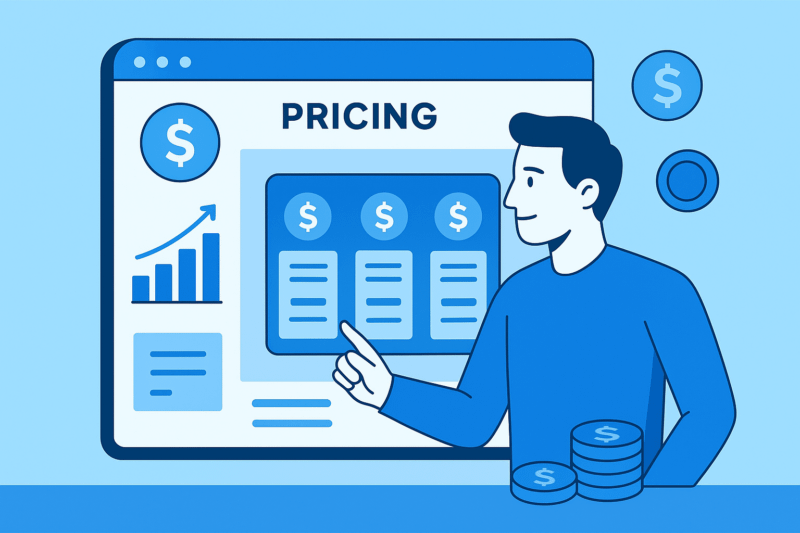
Start with 2 or 3 tiers instead of a complex pricing grid. A simple pattern like “Starter, Pro, Business” is often enough. Each step up should unlock clearly valuable outcomes, for example more seats, more projects, or more automation.
Usage based or tiered usage
If your product processes units like emails, API calls, or documents, tying price to usage can feel fair and flexible. A free or low cost starter tier can cover personal or hobby use, then higher usage can move customers into paid plans.
To avoid surprise bills, design your pricing page to show estimated monthly cost at different usage levels. Clarity builds trust, especially for small business customers who fear unpredictable expenses.
One time fees or lifetime deals
One time payments or limited lifetime deals can work when:
Your product is focused on a single outcome
Ongoing infrastructure costs are low
You want early cash to fund development
You still need a plan for support and updates. If you choose this route, be explicit about what customers get, for example lifetime access to v1, or access to all updates for a fixed period.
Align features with your pricing tiers
Your monetization strategy and your roadmap should move together. Each tier needs a clear story: who it is for and why upgrading is worth it.
A simple way to plan your tiers:
Entry tier: Core job to be done for a solo user or very small team
Middle tier: Collaboration or scale, for small teams that are growing
Top tier: Advanced features or higher limits for customers with more complex needs
For example, if you are building a client reporting tool, your entry tier might support a small number of active clients and basic reports. The next tier could unlock branded reports, team members, and scheduled exports. Your highest tier might focus on agencies with white labeling and advanced analytics.
The key is to avoid “fake” limits that only frustrate people, such as randomly disabling obvious quality of life features. Instead, let your free or low cost tier be genuinely useful, then reserve capabilities that create measurable business value for paid plans.
Design a free trial or freemium that converts
You will often hear that you must choose between free trials and freemium pricing. In reality, you can experiment with both until you see what converts best for your audience.
Free trial considerations
A time limited free trial, usually 7 to 30 days, gives users full access to your product. This works best when your core value can be felt within a few sessions. To make trials convert, you can:
Provide a guided onboarding checklist inside the app
Highlight one primary action that shows value fast, for example connect an integration or import data
Send helpful, behavior based emails during the trial period
When the trial ends, make the transition to paid simple and clear instead of abrupt or confusing.
Freemium considerations
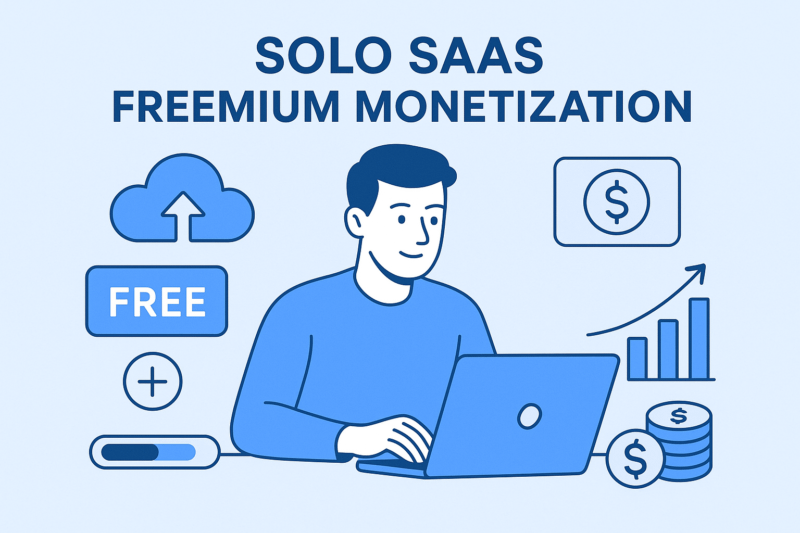
Freemium gives users a limited version of your product at no cost, indefinitely. This reduces friction to sign up and can create a large pool of potential future customers.
To protect your time and revenue, give your free plan:
Clear caps that encourage serious users to upgrade
Enough functionality so the product is not frustrating
Prominent but respectful upgrade prompts at natural moments
If your free users are mostly hobbyists or very price sensitive, that is not a problem as long as your paid tiers focus on business users with bigger problems and budgets.
Think in revenue milestones, not one big goal
As a solo founder, it is easy to fixate on a big revenue number and then feel discouraged when you are not close. A more sustainable approach is to define small, concrete revenue milestones that match your capacity.
For instance, you might begin with:
First dollar: One paying customer at any price
Validation stage: 5 to 10 paying customers, even if some are discounted
Stability stage: Enough monthly recurring revenue to cover core tools and hosting
Replacement stage: Recurring revenue that reliably covers your personal expenses
At each stage, you can adjust pricing, packaging, and positioning based on real feedback. This mindset turns monetization into a series of experiments instead of a pass or fail test.
Treat your early pricing as a draft, not a permanent decision. You can always refine it once you see how real customers respond.
Small revenue wins build confidence and momentum over time.
Use simple experiments to refine pricing
You do not need elaborate analytics to test monetization for solo SaaS founders. Start with low tech, high learning experiments.
A few ideas:
Manually quote prices: For early leads, discuss their needs and send a custom quote. You will quickly sense what feels expensive or cheap.
A/B test price points over time: Change your main price once a month and track whether sign ups or conversion rates shift meaningfully.
Offer annual discounts: Test a yearly plan at a discount, for example 2 months free, and see how many users prefer paying once.
Keep a simple spreadsheet with your experiments and outcomes. Over a few months, you will gather enough data to feel more confident about your pricing band.
Protect your time with lean operations
Your monetization strategy is not only about pricing, it is also about how you protect your time as a solo founder. The way you package, bill, and support customers can either create leverage or constant interruptions.
To keep operations sustainable:
Automate billing and invoicing through a reliable payment provider
Use clear in app messaging and help docs to reduce repetitive support questions
Set support expectations directly on your pricing page, for example “email support within 24 hours on business days”
You can also structure higher tiers to include priority support or onboarding calls. This turns a potential time cost into premium value that customers are happy to pay for.
When to raise prices as you grow
At some point, you will realize that your product delivers more value than your original price suggests. This is a sign that it may be time to raise prices or restructure your tiers.
You might be ready to adjust pricing if:
Customers rarely push back on cost during sales conversations
You have significantly improved the product without revisiting pricing
Your best customers tell you they would still buy at a higher price
When you do raise prices, communicate changes clearly and give existing customers a generous grandfather policy, for example keeping their current rate for a fixed period or indefinitely. This protects trust while moving your business into a healthier revenue range.
Bringing it all together
Monetization for solo SaaS founders works best when you weave it into every layer of your product:
You pick a painful, specific problem with a clear buyer
You choose a pricing model that mirrors how they see value
You structure tiers that encourage natural upgrades instead of forced ones
You experiment, refine, and protect your time as you grow
You do not need a perfect pricing strategy before you launch. You only need a solid starting point, a willingness to talk to customers, and the courage to adjust when you learn something new. Each iteration brings you closer to a product that pays you back for the risk you are taking.
John Beluca is a Solutions Architect and founder of Procedo, with 20+ years of experience building custom CRMs and internal tools that simplify business processes.