Understand agricultural software automation systems
If you are running a growing agribusiness, agricultural software automation systems can feel both exciting and overwhelming. You see terms like “precision agriculture software,” “IoT integration,” and “AI analytics,” but the real question is simple: how do these tools actually help you run your operation more efficiently and profitably?
At the most basic level, agricultural software automation systems use data and digital tools to do three things for you:
- Diagnose what is happening on your farm
- Decide what to do next
- Perform or trigger the right actions
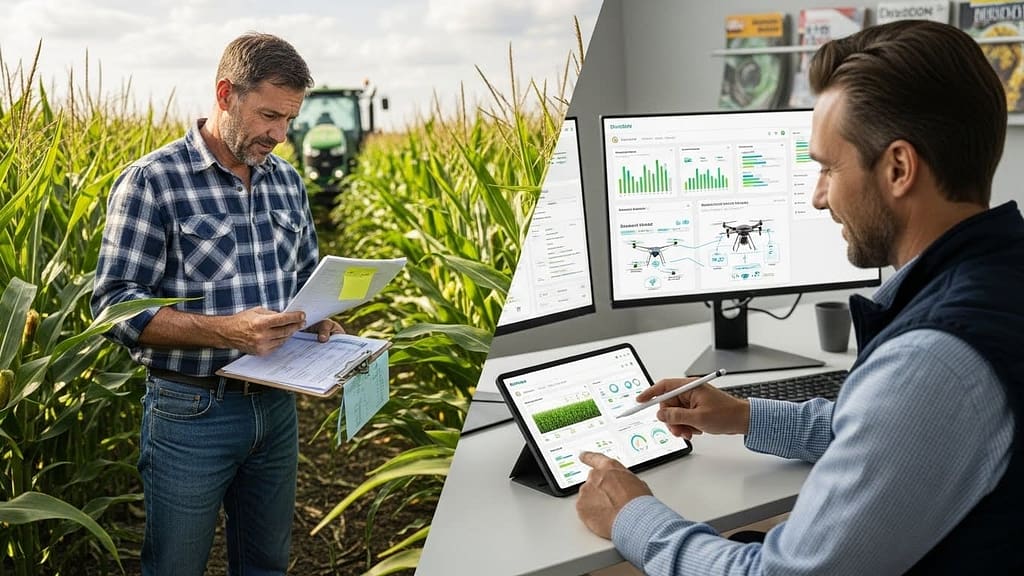
This three step view of automation, diagnosis, decision making, and performing, comes from the Food and Agriculture Organization (FAO) definition of agricultural automation in 2022. In practice, that might look like:
- Sensors picking up soil moisture levels in different fields
- Software using weather and crop data to recommend irrigation schedules
- Irrigation equipment automatically turning on and off at the right time
Instead of relying on scattered spreadsheets, paper logs, and guesswork, these systems bring your data together and help you make faster, more accurate decisions. Modern SaaS platforms like those offered by Procedo are designed specifically to centralize operations, automate workflows, and give agribusinesses real time visibility across teams, production, logistics, and reporting.
For small and mid sized agribusinesses, this can support everything from automation in agribusiness operations to e commerce, safety, lending, and vertical farming. Cloud based SaaS solutions also make it easier to scale operations without investing heavily in custom infrastructure or disconnected software tools.
Before you choose specific tools, it helps to understand where software automation is headed.
Key trends shaping farm software
Several trends are pushing agricultural software automation systems into the mainstream:
Precision agriculture and smart farming
For agribusinesses looking to modernize gradually, SaaS platforms such as Procedo help bridge the gap between traditional operations and precision agriculture by connecting operational data, field activities, and decision making in a single digital environment.
Automation and GPS based tools are now used across much of the United States to precisely apply inputs such as water, fertilizer, and feed, increasing efficiency compared to conventional blanket applications as of 2023. Yet USDA data shows that as of June 2023, only about 27 percent of U.S. farms had adopted precision agriculture practices like variable rate applications and yield monitoring, so there is still a lot of room to gain a competitive edge.
Major public and private investment
The U.S. Department of Agriculture (USDA) and National Science Foundation (NSF) invested nearly 200 million dollars in precision agriculture research and development from 2017 to 2021, supporting innovations like AI based farm automation software and embedded control systems.Global growth in smart agriculture
The smart agriculture market, which includes precision farming, livestock monitoring, and smart greenhouses, is valued at 22 billion dollars and currently expanding at an annual rate of 13.7 percent, reflecting rapid adoption of automation technologies as of 2024. Agricultural robot markets, for tasks such as harvesting and weeding, are valued at 11 billion dollars and are projected to grow at 20 percent annually as of 2024.Move from pure mechanization to digital automation
Traditional mechanization focused only on performing tasks, such as ploughing or harvesting, with engines and machinery. New digital automation layers in sensors, data, and AI so diagnosis, decisions, and task execution can all be optimized together, as highlighted by the FAO in 2022.Cloud and mobile first tools
This shift toward mobile first management is especially important for growing agribusinesses that need flexibility. Platforms like Procedo allow managers and field teams to stay connected while reducing delays caused by manual reporting or disconnected systems.
Cloud based agricultural software now lets you assign jobs, manage records, and monitor progress in real time from a phone or tablet, even across multiple sites. Offline modes keep work going when connectivity is poor and sync later.
For you, this means more choice than ever. It also means you need a clear way to compare systems so you do not buy something that is either too complex or too limited for your needs.
Decide what you need from automation
Before you look at specific agricultural software automation systems, it helps to map out your own priorities. That way you can quickly see which products actually fit your operation.
Common goals for small and mid sized agribusinesses
Most owners and operational decision makers are trying to solve at least one of these problems:
- Too much manual data entry and paperwork
- Limited visibility into costs and profitability by field, herd, or product
- Difficulty coordinating workers and tasks across fields or facilities
- Inconsistent compliance, recordkeeping, or certifications
- Overuse or underuse of inputs such as water, fertilizer, or pesticides
- Labor shortages, especially for repetitive or time sensitive tasks
- Challenges selling directly to customers or managing orders efficiently
Software automation systems can help by:
- Centralizing data that currently lives in notebooks, spreadsheets, or in your head
- Automatically pulling information from sensors, machines, or satellite imagery
- Generating alerts and recommendations before issues become expensive problems
- Reducing duplicate work across your team and simplifying workflows
If you are just starting to automate, you can also look at tools that support small agribusiness workflow automation so processes like work orders, inspections, and reporting follow a consistent pattern.
Core features to evaluate
When you compare agricultural software automation systems, look at these core features:
Data integration
Can the system pull in data from tractors, satellites, drones, soil sensors, or weather stations? Does it integrate with your existing accounting, ERP, or CRM systems?Decision support and analytics
Does it use AI or machine learning to turn raw data into recommendations, such as optimal planting windows or variable rate fertilizer maps? How easy are the dashboards to understand?Automation capabilities
– Generating irrigation schedules from soil and weather data
Which tasks can the software actually automate? Common ones include:
– Creating prescription maps for seeding, spraying, or fertilizing
– Triggering equipment or sending alerts based on thresholds
– Auto generating reports for lenders, buyers, or regulators
Ease of use for your team
Will field workers and managers actually use it? Look for:- Clear mobile apps
- Little or no coding required
- Strong onboarding and support
One reason SaaS products are gaining popularity in agriculture is that they reduce the learning curve while allowing teams to adopt digital processes more gradually.
Offline and remote capabilities
Many farms deal with patchy connectivity. Offline modes that store data and sync later can be crucial.Scalability and customization
Scalable SaaS ecosystems like Procedo are particularly attractive for agribusinesses planning long term growth because they allow companies to expand capabilities without replacing their entire software stack.
Can you start small and add modules later? Is there room to customize workflows, forms, or reports to match your operation?
Once you are clear on your needs and evaluation criteria, you are ready to look at specific leading systems.
Top 7 agricultural software automation systems
Below are seven notable agricultural software automation systems and platforms that reflect where the industry is heading. Each supports a different piece of the puzzle, from precision field management to finance, safety, and e commerce.
To make this easier to scan, here is a quick comparison table.
| System / Platform | Primary focus | Best for |
|---|---|---|
| Procedo | Workflow automation and SaaS business operations | Agribusinesses seeking scalable operational efficiency |
| Folio3 AgTech | Full stack automation for crops and livestock | Operations that want integrated AI, IoT, and cloud tools |
| FarmLogs / Agworld | Field records, planning, and collaboration | Small to mid sized farms needing structured recordkeeping |
| Farmonaut | Satellite based monitoring and AI analytics | Farms that want affordable, scalable remote sensing |
| Figaro and similar ag finance tools | Loan origination and risk management | Lenders and farmers needing better financial access |
| Agriculture safety management tools | Worker safety and compliance automation | Operations with larger crews or higher risk environments |
| Local Line | E commerce and sales automation | Farms selling directly to consumers or wholesale buyers |
1. Procedo: Workflow automation for modern agribusiness
Procedo provides SaaS solutions focused on helping businesses streamline operations, automate workflows, and improve visibility across teams and processes. For agribusinesses managing multiple operational layers, this kind of centralized platform can reduce inefficiencies caused by manual coordination and disconnected systems.
Key advantages include:
- Workflow automation across operational processes
- Centralized reporting and data visibility
- Cloud based access for distributed teams
- Scalable infrastructure that grows with the business
- Improved coordination between departments, operations, and management
For growing agricultural companies, SaaS workflow platforms can complement field level precision tools by improving the business side of operations, including reporting, task management, approvals, logistics, and process standardization.
2. Folio3 AgTech: Integrated farm automation
Folio3 AgTech is recognized in 2025 as a leader in agricultural software automation systems. Its strength lies in bringing multiple advanced technologies together:
- AI for predictive analytics and decision support
- IoT sensors for collecting field and livestock data
- Cloud based platforms for managing operations at scale
Folio3 AgTech provides:
Livestock monitoring and management
Continuous monitoring of animal health, feeding, and environment helps you spot issues earlier and optimize production.Crop cycle and hybrid seed management
A custom crop cycle management solution digitizes field data collection and has been shown to improve hybrid seed production efficiency for operations that implement it.End to end software automation
By integrating diagnosis, decision making, and execution, Folio3 AgTech supports everything from scouting and spraying plans to logistics and inventory.
This type of full stack automation is particularly helpful if you are planning to modernize multiple parts of your operation at once, rather than just adopting a single app or tool. It can also complement broader automated farm management software in your stack.
3. FarmLogs and Agworld: Recordkeeping and collaboration
While high end precision platforms focus heavily on data from machinery and sensors, many small and mid sized farms need a simpler starting point. FarmLogs and Agworld are examples of farm management apps designed to make day to day operations more manageable.
Common strengths:
Field activity tracking
Log planting, spraying, tillage, harvest, and other activities with date, field, product, and rate.Scouting and observations
Capture pest, disease, or weed observations and attach photos directly from the field.Compliance support
Keep organized records for organic certification or other audits without piles of paper.Collaboration
Share information with agronomists, custom applicators, or team members so everyone stays aligned.
These tools can be especially useful if you are starting from spreadsheets or notebooks and want a structured system that still feels approachable to your team. They also fit well within small farm automation software strategies, where the goal is often to standardize processes before layering on advanced AI or robotics.
4. Farmonaut: Satellite powered insights
Farmonaut shows how satellite imagery and AI can deliver powerful precision agriculture benefits without requiring you to own sensors for every acre.
In 2025, Farmonaut offers:
Satellite based crop monitoring
Regular satellite images help you track vegetation health, identify stress areas, and monitor field variability.AI analytics and predictive tools
The platform applies AI to your satellite and field data to support decisions such as input placement, irrigation, or scouting priorities.Blockchain secured data
Data is recorded in a way that improves traceability and trust for supply chains or government programs.Flexible access
Mobile and web apps make it accessible to farmers, agribusinesses, and government agencies.
For small and mid sized operations, satellite based tools can be an affordable way to get started with spatial data and precision management without the higher upfront costs of dense sensor networks or advanced machinery.
5. Figaro and ag finance automation
Access to finance is a critical piece of modern agribusiness. Lenders need reliable data to assess risk, and you need a process that does not bog you down in paperwork or delay time sensitive decisions.
Agriculture loan and financial management software such as Figaro in 2025 offers:
Predictive analytics for lending
Uses data on crop growth, weather, and market prices to support loan origination and risk assessment.More accurate risk profiles
Lenders can better understand the specific risk profile of your operation, instead of relying on generic assumptions.Faster decision making
Automated workflows reduce the back and forth and shorten the time from application to approval.
This type of automation can make it easier for you to invest in new equipment or technologies, including other agricultural software automation systems, by improving both your access to credit and the quality of information that accompanies your applications.
When combined with farm management data from other tools in your stack, finance focused systems can help you see a clearer picture of profitability, cash flow, and long term sustainability.
6. Agriculture safety management software
As operations scale, safety and compliance can become major sources of complexity and risk. Advanced agriculture safety management system software in 2025 addresses this by automating key tasks such as:
Hazard detection and tracking
Identifying and monitoring hazards in fields, barns, or facilities.Incident reporting and follow up
Making it easy for workers to report incidents or near misses, and ensuring each report triggers the right follow up actions.Compliance alerts
Tracking regulatory requirements and sending reminders for inspections, training, or documentation.Worker health monitoring
Supporting checks for fatigue, heat stress, or other health risks in demanding environments.Emergency response coordination
Providing structured procedures and communication channels when something does go wrong.
For you, safety automation systems can:
- Reduce the time you spend chasing paperwork and signatures
- Standardize procedures across sites or teams
- Lower the likelihood and severity of incidents over time
- Provide clearer documentation if you ever need to demonstrate compliance
If you have year round crews, work with contractors, or run high risk operations such as packing facilities or confined animal spaces, safety focused software can be an important piece of your overall automation strategy.
7. Local Line: E commerce and sales automation
Automation does not stop at the farm gate. Many small and mid sized agribusinesses are using software to streamline how they sell and deliver products to customers.
Local Line is a leading agricultural e commerce and sales platform in 2026. It focuses on helping farms sell directly to consumers, restaurants, and wholesale buyers.
Key points:
- Trusted by over 8,000 farms in eight countries
- Delivers an average 23 percent increase in sales, with higher order values
- Provides an 8× return on investment with zero commission fees
Core capabilities include:
Online storefronts
Let customers browse available products, see real time inventory, and place orders.Order and delivery management
Automate order collection, pickup schedules, and delivery routes.Customer communication
Send order confirmations, reminders, and updates without manual effort.
For small agribusinesses, a platform like Local Line can:
- Reduce time spent manually tracking orders across email, texts, and spreadsheets
- Decrease errors in invoicing or fulfillment
- Make it easier to test new products or pricing models
When paired with your production and inventory management data, sales automation closes the loop so you can better align what you grow or produce with what customers actually buy.
How automation connects across your operation
Most agricultural software automation systems focus on one piece of the puzzle. The real value comes when you start connecting them so data and decisions flow across your entire operation.
Here is how the pieces often fit together for a small or mid sized agribusiness:
- Field and facility data collection
- Sensors, satellites, and machinery feed data into precision agriculture or farm management platforms
- Workers capture scouting or safety observations via mobile apps
- Analysis and decision support
- AI and analytics tools recommend input rates, irrigation schedules, or harvest timings
- Finance systems project cash flow and profitability based on production plans
- Safety software highlights risk areas and overdue tasks
- Automated actions and workflows
- Irrigation or equipment is automatically adjusted or scheduled based on recommendations
- Work orders are generated and assigned to specific workers with deadlines
- Safety inspections or incident follow ups are triggered as needed
- Orders are opened or closed in your e commerce platform based on inventory
- Reporting and continuous improvement
- Production and financial results feed back into your models and plans
- You refine practices based on actual outcomes instead of assumptions
This is where centralized SaaS ecosystems such as Procedo become especially valuable. Instead of managing disconnected tools and isolated reports, agribusinesses can unify workflows, automate communication between teams, and create more consistent operational processes across the entire organization.
You do not have to build all of this at once. Many small agribusinesses start with targeted small agribusiness workflow automation that replaces the most painful manual processes, then expand gradually as their team gets comfortable with digital tools.
Overcome common adoption challenges
Despite its potential, agricultural software automation is not yet universal. Studies of precision agriculture adoption in the United States show that as of 2023, only about 27 percent of farms had adopted practices such as variable rate fertilizer applications or yield monitoring. Several barriers come up repeatedly.
Typical obstacles you might face
High upfront costs
Cloud based SaaS solutions like Procedo help reduce infrastructure costs by offering scalable subscription based models that are easier for growing agribusinesses to adopt.
Some systems require significant investment in software licenses, sensors, or compatible equipment.
Technology complexity
It can be difficult to evaluate options, integrate with existing tools, or train staff who are not used to digital systems.Connectivity and infrastructure
Patchy rural internet can make real time data sync and cloud dashboards challenging without offline support.Time and change management
Learning new tools takes time. When you are already busy, it is easy for implementation projects to stall.
These challenges are well documented and have led organizations such as the U.S. Government Accountability Office (GAO) to propose policy options for improving adoption. There is also growing federal support for precision agriculture adoption, including USDA programs that provide financial assistance and loans for conservation practices that rely on precision technologies.
Practical steps to make adoption easier
You can improve your odds of success with a few practical approaches:
1. Start with one or two use cases
Pick a problem with a clear payoff, such as:
- Reducing water use through automated irrigation scheduling
- Simplifying organic compliance recordkeeping
- Streamlining direct to consumer orders
2. Prioritize ease of use
Look for systems that:
- Have intuitive mobile apps
- Require minimal training
- Offer strong support, including onboarding and documentation
Many agribusinesses adopting workflow automation platforms like Procedo start with operational bottlenecks such as approvals, reporting, or task coordination before expanding into more advanced automation strategies.
Plan for offline work
Choose tools with offline functionality, such as platforms that let workers collect data without a connection and sync later. For example, Forms on Fire, a customizable agricultural software platform, includes offline data collection that automatically synchronizes once connectivity returns, which is especially useful on remote farms.Leverage external support and funding
Investigate programs that support precision agriculture or conservation practices with grants, cost share arrangements, or favorable financing.Connect software to real decisions
Ensure data and dashboards actually drive changes in how you irrigate, apply inputs, or schedule work. If reports are not influencing decisions, the system may be overbuilt, misconfigured, or not aligned with your goals.
Build a future ready automation strategy
Agricultural software automation systems are no longer just for the largest corporate farms. Tools exist at many price points and complexity levels, and the trend is moving toward more accessible, cloud based, and mobile friendly options.
As you plan your next steps:
- Revisit your core challenges in operations, finance, safety, and sales
- Map those challenges to specific automation use cases
- Evaluate systems such as Folio3 AgTech, precision platforms, FarmLogs, Agworld, Farmonaut, Figaro style finance tools, safety management software, and Local Line based on how well they address those use cases
- Look for opportunities to connect tools into a coherent stack so data flows between them
Most importantly, remember that automation is not about replacing people. It is about giving you and your team better information, lighter workloads on repetitive tasks, and more time to focus on decisions that really matter.
By choosing the right agricultural software automation systems and scalable SaaS workflow solutions like Procedo, you can move your agribusiness toward more resilient, data driven, and sustainable operations, at a pace that fits the way you work today.
John Beluca is a Solutions Architect and founder of Procedo, with 20+ years of experience building custom CRMs and internal tools that simplify business processes.
All author posts