Most companies today use many tools to manage daily work. Email, chat apps, spreadsheets, and shared drives are common. At first, these tools help teams move fast. However, as the company grows, a web portal becomes essential because scattered tools often create more problems than solutions.
For example, employees waste time searching for the right file. In addition, updates get buried in long email chains. As a result, approvals take too long because no one knows who has the request. Therefore, with so much spread across different apps, teamwork slows and frustration grows.
This is why a web portal makes a difference. A portal brings communication, data, and workflows into one place. Consequently, with one entry point, teams can focus on work instead of chasing information. In this article, we explain why portals matter, the problems they solve, and the benefits they bring to growing businesses.
The Problem with Too Many Tools
As a business grows, so do the tools it uses. A small team may start with just email and cloud storage. Over time, however, new apps appear—Slack or Teams for messages, Trello or Asana for projects, Google Drive for files, and maybe even a CRM or ERP.
Each tool helps on its own. Together, though, they create big challenges:
- Silos – Teams use different channels, so they miss key updates.
- Duplicate work – Without one source of truth, employees redo tasks.
- Inconsistent data – Many versions of the same file cause errors.
- Lost time – Staff spend hours switching apps or searching for files.
- Low visibility – Leaders cannot see delays or progress clearly.
Consequently, these problems waste both time and money. For instance, a McKinsey study found employees spend almost 20% of their week looking for information or colleagues. In other words, that equals one full day lost every week.

What Is a Web Portal?
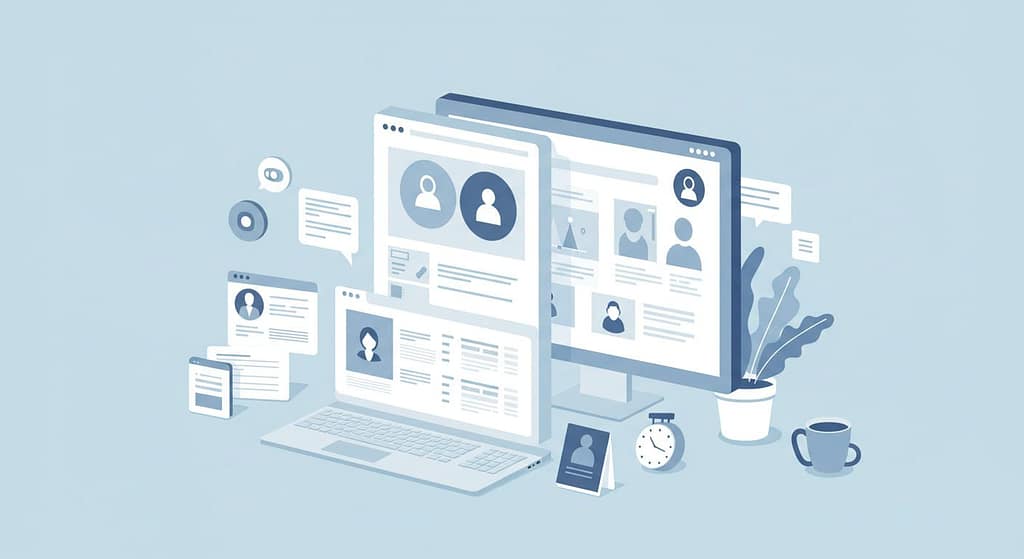
A web portal is a secure online space that brings communication, data, and tasks together. Unlike standard software, a custom portal adapts to your team’s needs.
Think of it as your company’s digital headquarters:
- Employees log in and see tasks, updates, and documents in one place.
- Managers view dashboards with progress, delays, and deadlines.
- Teams work together in real time, without switching apps.
In short, a web portal is a single place to find what you need. Therefore, it becomes the central hub for daily operations.
Why Choose a Web Portal?
Organizations build portals for one clear reason: to fix the pain of scattered tools. Moreover, the benefits are strong.
Clear Communication
All updates and messages live in one space. As a result, employees no longer wonder if an update was in Slack or buried in an email.
Safe Data
Scattered files are risky. By contrast, a portal keeps data in one secure system. With role-based access, teams always use the approved version of documents.
Better Teamwork
Teams work better when they share tasks, files, and updates. Furthermore, with version control and real-time edits, everyone stays on the same page.
More Productivity
Switching between apps kills focus. Instead, with a portal, employees search less and waste less time. In addition, automated workflows handle approvals and reminders. Therefore, people can focus on real work.
Visibility and Control
Managers see progress through dashboards and reports. This means they can catch delays early and assign resources where needed. Consequently, accountability improves across teams.
Room to Grow
Unlike fixed tools, a custom portal grows with your business. As you scale, you can add new features, modules, or integrations. In this way, the portal evolves with your needs.
Examples of Web Portals in Action
The impact of a portal depends on the type of organization. Here are a few examples:
- Large companies – Portals spread updates across offices and regions. Therefore, HR can manage requests, onboarding, and training in one place.
- Mid-sized businesses – Growth often adds complexity. Thus, a portal cuts extra tools, speeds up approvals, and lowers costs.
- Nonprofits – They manage donor records, volunteer schedules, and campaigns in one hub. As a result, limited resources go further.
- Schools and universities – Students, teachers, and staff access schedules, announcements, and course materials. Consequently, learning becomes smoother for everyone.
How We Build Web Portals
At Procedo, we do more than code. Instead, we design portals around people and processes. Typically, our method follows these steps:
1- Discovery – We learn your pain points and long-term goals.
2- Design – We map workflows and build simple structures.
3- Development – We add the features and integrations you need.
4- Testing and Launch – We check everything before rollout.
5- Support – We refine as your business grows.
This way, the portal works today and supports you in the future.
More Than Just a Tool
Efficiency matters. At the same time, culture matters too. A portal builds trust because information is accurate and available. It also removes the stress of lost files and unclear updates.
When staff know they can rely on one system, they feel more connected. In turn, this trust builds stronger teamwork and openness. Over time, the portal becomes the backbone of collaboration.
The Future Is Centralized
Work will only get more complex. Remote teams, hybrid schedules, and global offices all add challenges. Therefore, without centralization, companies will fall behind.
On the other hand, with a custom portal, organizations gain clarity, alignment, and flexibility. As a result, they are ready to face change with confidence.
Final Thoughts
If your team spends too much time chasing files, waiting for approvals, or switching apps, you are not alone. In fact, these are signs your tools no longer fit your needs.
Fortunately, a web portal solves these issues by centralizing data, improving teamwork, and boosting productivity. As a result, your business grows stronger and your culture improves.
At Procedo, we build web portals that adapt to you. Ultimately, our goal is to make work easier, faster, and more collaborative.
So, are you ready to see how centralization can change your team?